Nobody Wins Trump’s tariffs were struck down by the Supreme Court, reimposed the same afternoon, and are now being rebuilt through a maze of legal workarounds. Every American household is paying the price. So is the rest of the world.
The tariff war that Trump launched in early 2025 has been the most consequential, chaotic, and contested trade policy the United States has seen in a generation. It has raised prices on everything from groceries to cars to prescription drugs. It has cost small businesses hundreds of thousands of dollars. It has rattled global markets, broken trade deals, and set off retaliatory measures from Canada, China, Mexico, and the European Union.
And now, after the highest court in the land said much of it was illegal, the administration did not blink. It found a different law, signed a new order within hours, and told the world that tariff revenue “will not go down.” This is not a trade policy. It is a statement of intent. And its consequences, for Americans and for the global economy, are still unfolding.
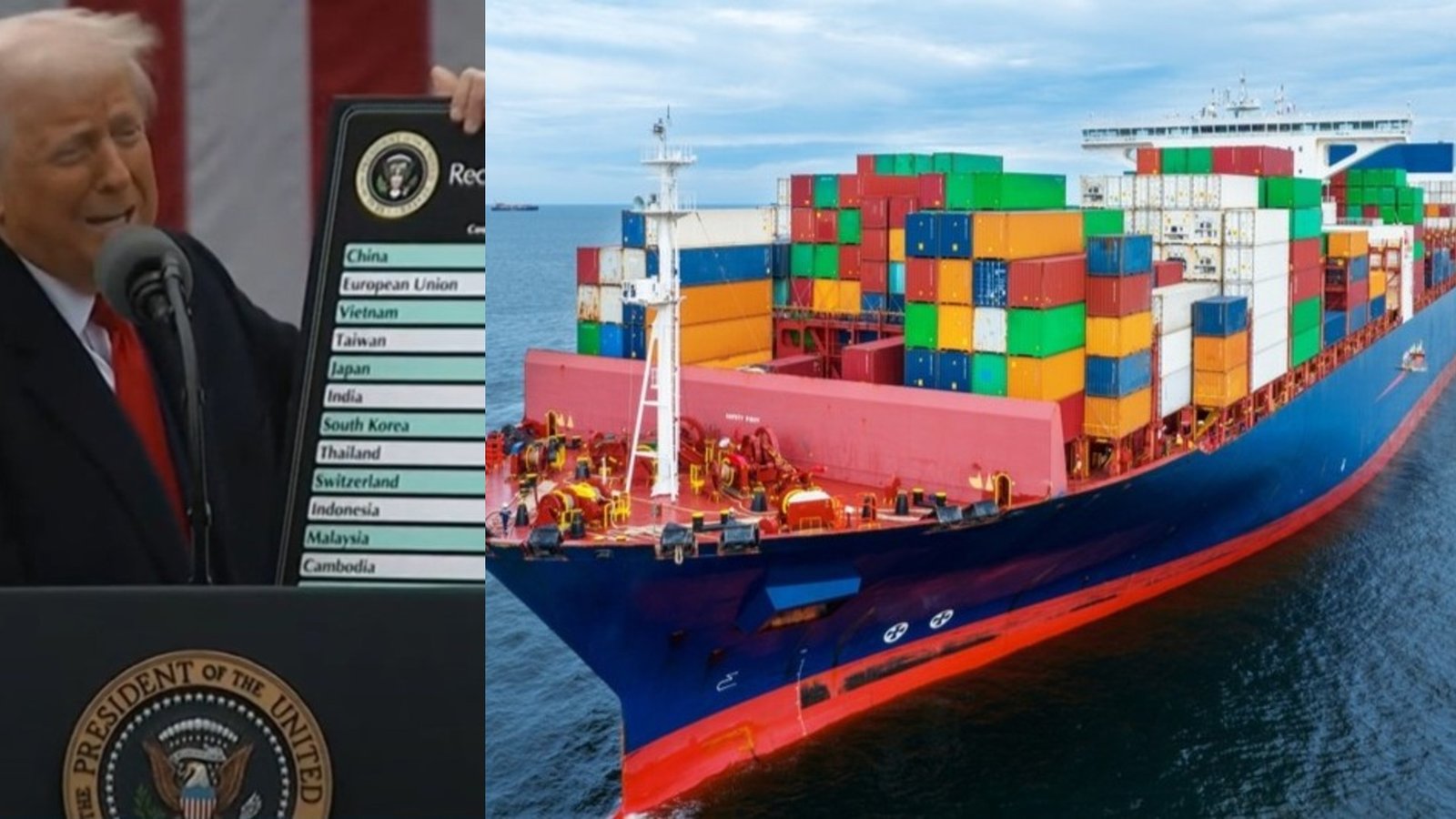
Cargo containers at the Port of Los Angeles. Tariffs added 3.1 percentage points to the average effective US import rate in 2025. After the Supreme Court ruling, the rate dropped temporarily before new Section 122 duties began. Photo: AFP / Getty Images
On the morning of 20 February 2026, six Supreme Court justices agreed on something that had seemed obvious to many legal scholars for months: tariffs are a form of taxation, and under Article I of the US Constitution, the power to tax belongs to Congress, not the President. The 6-3 ruling struck down Trump’s sweeping “reciprocal” tariffs, which he had imposed on nearly every country in the world using the International Emergency Economic Powers Act, a 1977 law designed for specific national security emergencies, not a wholesale rewrite of global trade.
Trump’s reaction was immediate and revealing. He called the ruling “a total disgrace.” He attacked Justices Neil Gorsuch and Amy Coney Barrett, his own nominees, for voting with the majority. Then, within hours, he signed a new executive order imposing a 10 percent global tariff under a completely different statute: Section 122 of the Trade Act of 1974. By Saturday he was on Truth Social announcing 15 percent. By Tuesday, US Customs was collecting the new rate at midnight. “Pure tariff chaos from the US administration,” wrote Bernd Lange, a senior EU lawmaker on Sunday. “No one can make sense of it anymore.”
Section 122 comes with hard limits: tariffs cannot exceed 15 percent and can last no longer than 150 days. Any extension requires an act of Congress. Treasury Secretary Scott Bessent brushed this off, insisting that “no one should expect tariff revenue to go down.” On 11 March the administration announced 16 new Section 301 trade investigations targeting China, Mexico, the EU, and 13 other economies. The aim is clear: rebuild the tariff wall through slower, legally sturdier mechanisms before the clock expires.
The ruling also created an enormous financial problem the administration had not publicly anticipated. Most trade framework deals struck since early 2025 were negotiated under IEEPA authority, meaning they are now legally void. The EU froze implementation of its agreement within days. China’s embassy spokesperson noted that Beijing had actually achieved a lower tariff rate without making any concessions whatsoever. “China will definitely feel it has the upper hand going into negotiations,” said one trade lawyer briefed on the situation.
Section 122 of the Trade Act of 1974 allows the President to impose a temporary import surcharge of up to 15 percent to address a balance-of-payments crisis or prevent a significant dollar depreciation. It requires no congressional approval to start, but expires after 150 days unless Congress extends it.
Trump’s use of it to address a trade deficit, rather than a currency emergency, is already being challenged in court by two businesses as of mid-March 2026. Legal experts say this challenge has a stronger basis than the administration is publicly acknowledging.
- Jan 2025 Trump signs America First Trade Policy memorandum on day one of his second term, directing all cabinet secretaries to review trade practices and prepare sweeping tariff recommendations.
- Early 2025 IEEPA tariffs imposed on virtually all US trading partners, ranging from 10 to 50 percent. Canada, Mexico, China, and the EU begin retaliatory measures. Global markets enter a prolonged period of uncertainty.
- Aug 2025 US Court of Appeals for the Federal Circuit rules IEEPA does not authorise tariffs. Tariffs kept in place pending Supreme Court appeal. Customs duties raise $264 billion in 2025, up from $79 billion in 2024.
- Feb 20, 2026 Supreme Court rules 6-3 that IEEPA does not authorise tariffs. Trump calls it “a total disgrace.” Signs a new 10 percent global tariff under Section 122 within hours of the ruling.
- Feb 24, 2026 New Section 122 tariffs take effect at 10 percent, despite Trump posting on Truth Social they would be 15 percent. Confusion spreads among importers, foreign governments, and financial markets.
- Mar 4, 2026 Court of International Trade orders Customs to begin refunding IEEPA tariffs. CBP says it cannot comply immediately and proposes a new digital system. Estimated refunds owed: $175 billion.
- Mar 11, 2026 Trump administration announces 16 new Section 301 trade investigations targeting China, Mexico, the EU, and 13 other economies, laying the groundwork for a legally sturdier permanent tariff architecture.
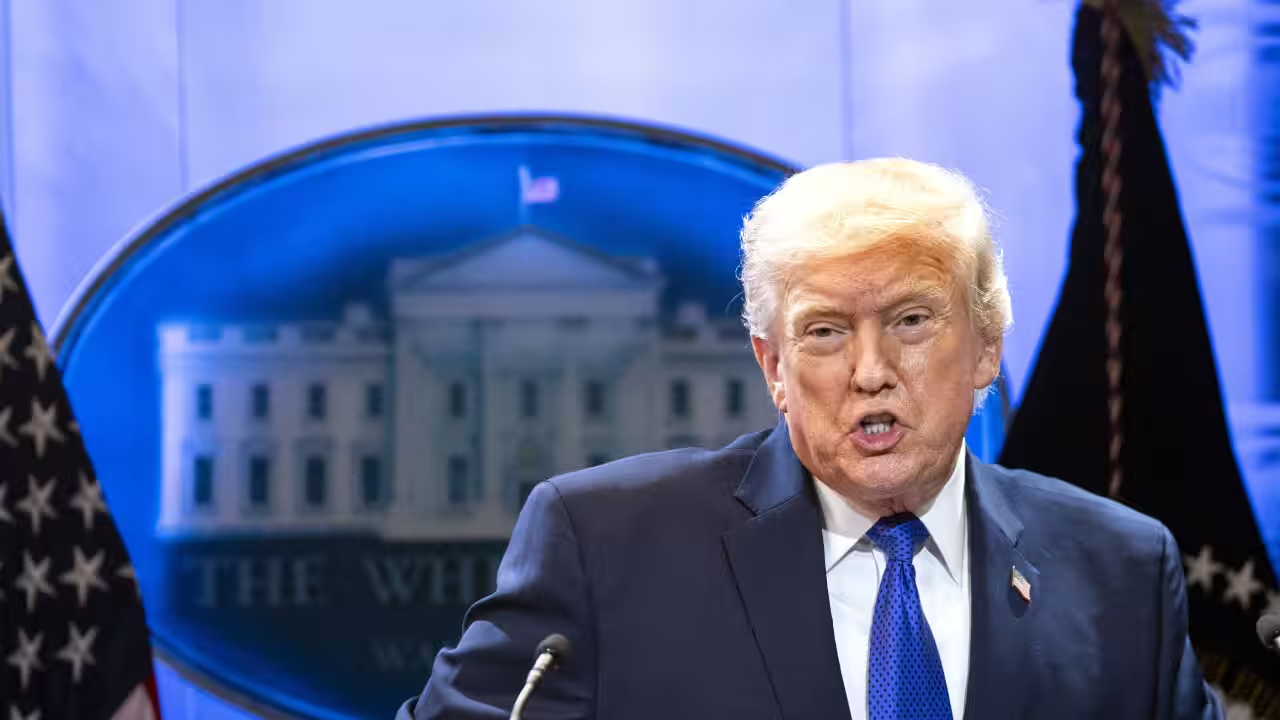
The Supreme Court ruled 6-3 that IEEPA does not authorise presidential tariffs. Within hours, Trump had a replacement order signed under a different statute. Photo: Getty Images
The numbers are stark, but they do not land until you connect them to something tangible. A tariff is a tax on imports. When the US government imposes one, the American company that imported the goods pays it at the border. That company then raises its prices to cover the cost. The person at the end of that chain, paying more for a jacket, a washing machine, a bottle of ibuprofen, or a new car, is you. According to the Yale Budget Lab, Trump’s tariffs are on track to cost the average American household $2,512 in 2026, up 44 percent from $1,745 in 2025.
That average disguises something important. Tariffs are regressive. They hit lower-income families harder because those families spend a larger share of their income on physical goods. The Tax Policy Center estimates that households in the bottom income quintile will see their effective tax rate rise by 1.1 percentage points, compared to a 0.9 point increase for the wealthiest households. Walmart’s chief financial officer said it plainly: low-income consumers are being stretched. The company’s growth is now coming from higher-income shoppers. Target, BJ’s Wholesale Club, and Home Depot have all said the same.
For small businesses, the damage has been slower to register in the headlines but devastating in practice. A typical small business importing goods from abroad faced more than $90,000 in tariff costs between April and July 2025 alone, with revenue down 13 percent over the same period. In November 2025, businesses with fewer than 50 employees laid off 120,000 workers in a single month, the largest such figure in five years. Half of small-business owners polled had already raised prices. Three-quarters said they were worried about surviving the next 12 months.
Car prices are another area of acute concern. Tariffs on steel, aluminium, and imported auto parts are projected to add up to $5,286 to the average price of a new car. Columbia Sportswear raised US prices by a high single-digit percentage for its Spring and Fall 2026 collections. The administration has signalled that pharmaceutical tariffs could rise to 200 percent by mid-to-late 2026. That would affect every American who takes a branded medicine manufactured abroad, which is to say almost every American.
The irony is not lost on many economists. Trump’s stated case for tariffs was that they would lower prices by bringing manufacturing home. The evidence runs in the opposite direction. J.P. Morgan’s chief global economist Bruce Kasman noted that “model estimates uniformly show negative growth impulses from tariffs,” and that studies of the 2018 to 2019 trade war found that tariff costs “were borne primarily by US consumers.” The IMF has warned that a universal 10 percent tariff rise, with retaliation, could reduce US GDP by 1 percent and global GDP by around 0.5 percent through 2026.
The $901 billion US goods trade deficit in 2025, the figure Trump has cited as his primary justification, barely budged despite a full year of aggressive tariffs. This is not surprising to trade economists, who have consistently noted that trade deficits are a function of national savings rates and investment patterns, not tariff levels. You cannot close a deficit by taxing imports if you do not also change the domestic consumption behaviour that creates the demand for those imports.
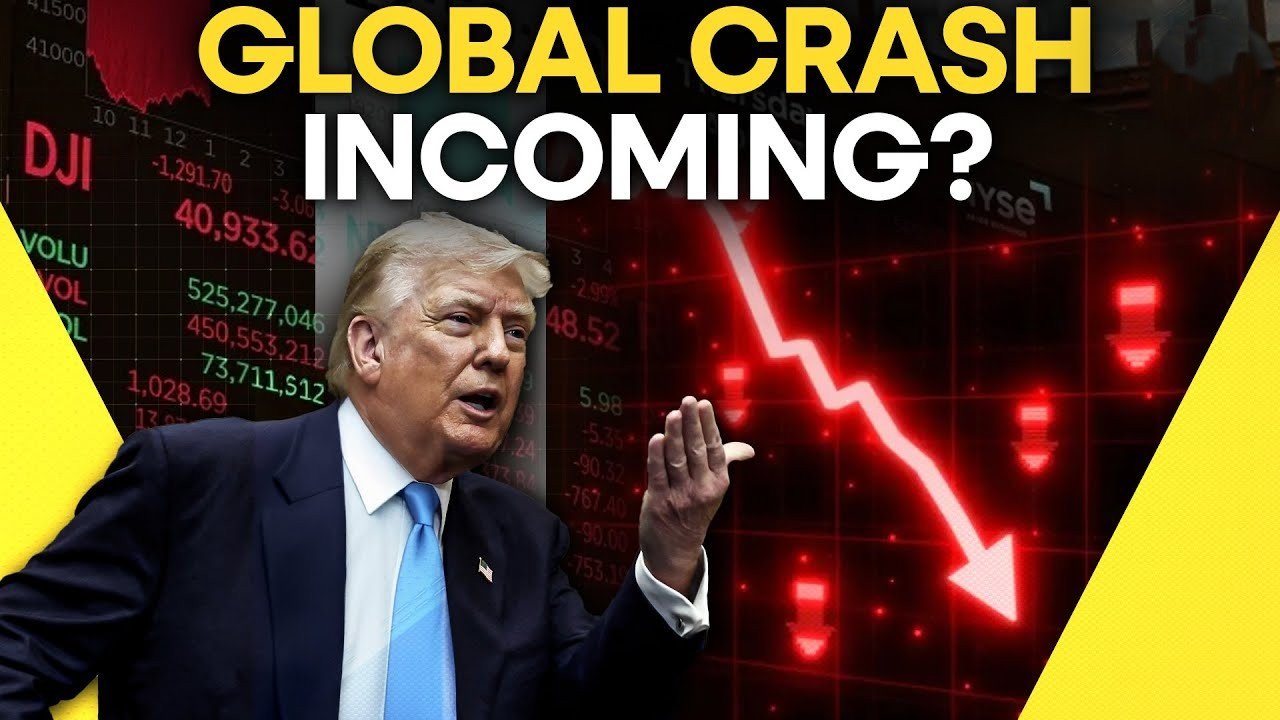
Small businesses importing goods faced over $90,000 in tariff costs in just four months of 2025. Three-quarters of small business owners surveyed said they fear for their survival in 2026. Photo: Reuters
The administration’s tariff policy has not gone unchallenged beyond US borders. Canada, which faces 35 percent tariffs on certain sectors, 50 percent on imported metals, and 25 percent on non-US cars, is living in a state of permanent trade anxiety. Most Canadian goods remain exempt under the USMCA agreement, but with the USMCA review due later this year, Canadian leaders know Trump could use that review as another lever. Trade Minister Dominic LeBlanc told journalists after the SCOTUS ruling that “significant work remains,” a diplomatic way of saying nobody knows what comes next.
China’s position is uniquely complicated. Beijing faced the highest IEEPA tariffs of any country, and the Section 232 steel, aluminium, and auto tariffs remain in place. The new Section 122 duty brings China’s combined rate to 35 percent. Yet as China’s embassy spokesperson quietly noted, Beijing came out of the Supreme Court ruling in a better position than many countries that had negotiated deals, because it had made no concessions and still received a lower rate. “China will definitely feel it has the upper hand going into negotiations,” said one trade lawyer. Trump meets Xi in Beijing from 31 March to 2 April. No analyst expects fundamental resolution.
The European Union had agreed to a 15 percent tariff under a deal negotiated during the IEEPA period. When the court ruling invalidated its legal basis, the EU froze the agreement. The bloc now sits in an awkward position: the rate it agreed to was actually higher than the 10 percent Section 122 rate now in place, meaning the ruling technically helped European exporters in the short term. But no one in Brussels is celebrating. Nothing is settled. Everything could change again within weeks.
The British Chamber of Commerce summarised the broader mood after the ruling, saying it did “little to clear the murky waters for business.” That sentence captures the entire problem. Businesses do not invest, hire, or plan expansion when they cannot forecast their input costs six months ahead. That uncertainty is itself a cost, and it is one that does not appear in any tariff tracker spreadsheet. It accumulates silently in cancelled orders, deferred hires, and abandoned plans up and down every supply chain connected to the US market.
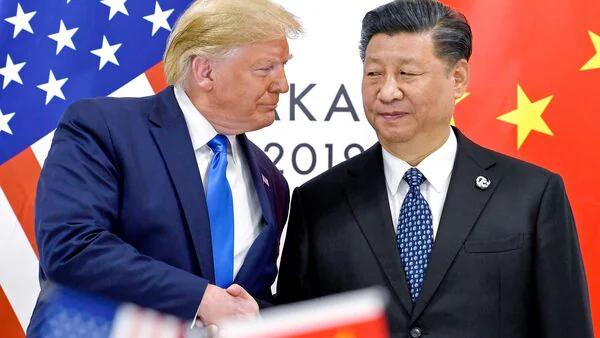
Trump is scheduled to meet Xi Jinping in Beijing from March 31 to April 2. China’s combined tariff rate now sits at 35 percent. Analysts say Beijing enters those talks feeling it has the upper hand. Photo: AFP
The 150-day window on the Section 122 tariffs expires in late July 2026. That date is the next major marker in what has become an exhausting cycle of policy, legal challenge, workaround, and more legal challenge. The administration has three realistic options when the clock runs out. It can go to Congress for an extension, requiring a legislative majority in a divided environment. It can attempt to convert tariffs into permanent Section 301 duties through the investigations underway, though those processes typically take 12 to 18 months. Or it can let them lapse and fall back on Section 232 tariffs that survived the court ruling, covering steel, aluminium, lumber, copper, automobiles, and semiconductors.
Treasury Secretary Scott Bessent has said publicly that tariff revenues “will return to virtually unchanged levels.” That is an ambitious claim. The IEEPA tariffs accounted for roughly 61 percent of the year-on-year increase in US tariff collection before they were struck down. Replacing that revenue through Section 301 and Section 232 alone, without the universality of the IEEPA regime, is a structurally difficult task that no one in the administration has explained in concrete terms.
The refund question is becoming a serious logistical headache. The Court of International Trade ordered US Customs and Border Protection to begin refunding IEEPA tariffs on 4 March 2026. CBP said it could not comply immediately and proposed a new digital system, estimated to be ready in late spring. The total refunds potentially owed to importers sit at around $175 billion. Until that money is returned and the legal status of the replacement tariffs is clarified, every business importing goods into the United States is operating in genuine uncertainty about what it paid, what it owes, and what it will owe next month.
The pharmaceutical tariff threat looms especially large. J.P. Morgan has flagged that the administration has signalled pharmaceutical duties could rise toward 200 percent by mid-to-late 2026. If that materialises, it would be one of the most significant healthcare cost shocks in modern American history, arriving on top of health insurance premium increases already projected at a median of 18 percent nationwide this year, partly because insurers have begun baking tariff uncertainty into their rate calculations for 2026 and beyond.
Section 122 tariffs took effect February 24, 2026 and expire approximately July 23, 2026 unless Congress extends them or the administration replaces them through alternative legal mechanisms.
Trump-Xi Beijing summit: March 31 to April 2, 2026. The 16 Section 301 investigations announced March 11 typically take 12 to 18 months to produce actionable tariffs. USMCA review affecting Canada and Mexico tariffs is due later in 2026.
The defining characteristic of Trump’s tariff approach is not its ambition or its scale, though both are considerable. It is its willingness to absorb economic damage in pursuit of a political narrative. The administration has now twice had its tariff regime struck down or invalidated by courts. Twice it has responded by finding another legal mechanism and continuing. The message to trading partners, to the courts, and to American businesses is consistent: the tariffs are not a means to an end. They are the end.
That posture has costs that compound over time. Businesses do not build factories, hire workers, or commit to supply chain investments when they cannot forecast their input costs. The damage from tariff uncertainty is not linear. It accumulates. Every month of confusion at the Port of Los Angeles, every delayed capital expenditure by a furniture retailer in Ohio, every small manufacturer in the Midwest that decides not to hire because it cannot predict what its steel will cost in six months, is a brick removed from the foundation of the economy that tariffs are supposedly defending.
The global consequences are quieter but no less real. The US goods trade deficit sat at $901 billion in 2025 despite a full year of aggressive tariffs. It barely moved. Trade economists have consistently noted that deficits are a function of national savings rates and investment patterns, not tariff levels. You cannot close a deficit by taxing imports if you do not also change the domestic consumption behaviour that creates the demand for those imports in the first place. A year of data now supports that view conclusively.
What the tariffs have done is something different and more complex. They have accelerated a fragmentation of global trade that was already underway. Countries sitting between the US and China are now being forced to choose sides. Southeast Asian manufacturers that moved operations to Vietnam and Cambodia to escape earlier tariffs now face fresh Section 301 investigations. The EU is renegotiating a deal that may no longer be legally valid. Canada is waiting to see what the USMCA review produces. India is negotiating with everyone and committing to no one.
The 150-day clock on Section 122 expires in late July. What comes after is genuinely unknown. Congress could act. The courts could intervene again. The administration could find another mechanism. Or the Section 301 investigations could eventually produce a new tariff architecture that is legally sturdier but just as disruptive. What is not in doubt is that the tariff war, in whatever form it takes next, is not going away. And neither are its costs.
Sources: Tax Foundation Tariff Tracker (March 2026) · Yale Budget Lab · Tax Policy Center · J.P. Morgan Global Research · White House Fact Sheet February 24, 2026 · Reed Smith Trade Compliance Resource Hub March 13, 2026 · Center for American Progress · NerdWallet Small Business Report · IMF World Economic Outlook · CNBC · Al Jazeera · NBC News · Fortune · Washington Informer · British Chamber of Commerce
Published 17 March 2026. All statistics reflect data available at time of publication. The tariff and legal situation is subject to rapid change as court proceedings and Section 301 investigations continue to evolve.