ProWriter

penink

Words that work. Stories that sell.

World

War in the Gulf, Windfall for the Electric Car

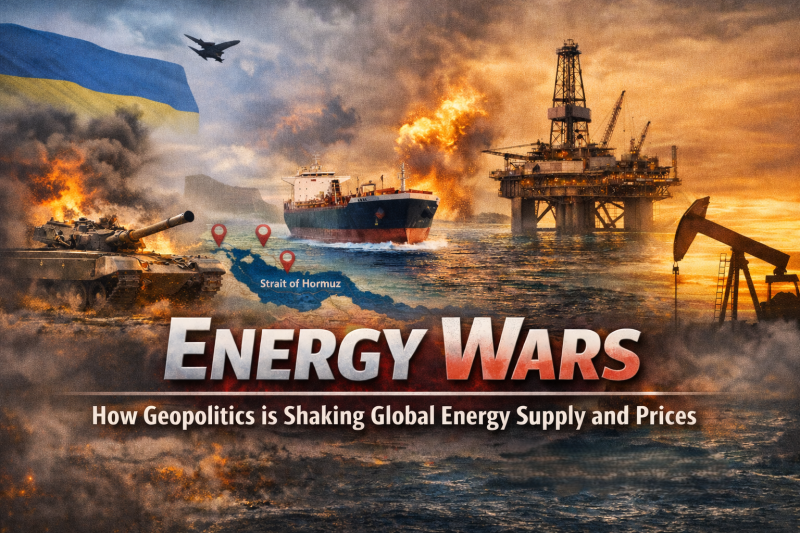
As Gulf tensions push petrol past $2.50, the real winner isn’t oil, it’s the Electric Vehicle.

The Deep Current Investigation March 31, 2026 ๐Ÿ”ฅ โšก War ยท Oil ยท Energy Transition War in the Gulf,Windfall for theElectric Car As Brent crude smashes past $120 a barrel and the Strait of Hormuz sits blockaded, electric vehicle demand is reigniting worldwide. Coincidence or something far more carefully constructed? By Editorial Research Desk  ยท  Energy & Geopolitics  ยท  14 min read 01 The Crisis Unfolding Right Now The world woke up on February 28, 2026 to a different energy reality. Following a series of military exchanges involving the United States, Israel, and Iran, the Strait of Hormuz through which nearly 20 million barrels of oil pass every single day effectively closed. What followed was not merely a price spike. It was a structural rupture that energy analysts say may define the decade. PERSIAN GULF REGION ยท OIL TANKER ROUTE Strait of Hormuz blocked since Feb 28, 2026 ยท IEA: largest supply disruption in modern history Oil tankers in the Persian Gulf region. The closure of the Strait of Hormuz disrupted an estimated 20 million barrels per day of seaborne oil the largest supply disruption in modern history, per the IEA. Source: CNBC / IEA Brent crude has been hovering stubbornly between $110 and $125 a barrel, and the Iran conflict has shifted from simmering regional tension into a full-blown systemic shock rattling every corner of the global economy. From February 28 to March 27, Brent crude jumped from $72.48 to $112.57 a 55% increase in less than a month. Fertiliser costs have risen 40%. The national average for a gallon of regular gasoline in the US climbed from $2.94 to $3.57 in a single month, according to AAA. +55% Oil price rise since Feb 28 (Brent) 20M Barrels/day blocked at Hormuz +22% EV & hybrid research on Edmunds post-war $120 Brent crude peak, March 2026 “As advocates of renewable energy often say: no blockade can stop the sun from shining.” Chicago Council on Global Affairs, March 2026 02 EVs Were Already Winning Before the War Here is the data point that should stop every oil analyst: global uptake of electric vehicle fleets had already led to avoided oil consumption rising to the equivalent of 70% of Iran’s entire oil exports in 2025 before the war ever began. The transition was already well underway; the war simply made it undeniable. โšก โšก โšก ELECTRIC VEHICLE CHARGING STATION ยท GLOBAL EV FLEET 2025 IEA: EVs displaced 1.3M barrels/day of oil in 2024 up 30% year-on-year Electric vehicles at a public charging hub. By end of 2024, the global EV fleet reached nearly 58 million more than triple the count from 2021. Source: IEA / Carbon Credits The IEA reports that electric vehicles slashed oil demand by over 1.3 million barrels per day in 2024 a steep 30% jump from 2023, nearly equal to all the oil Japan uses for transportation. By 2030, EVs are projected to replace more than 5 million barrels per day globally, with China’s expanding EV fleet making up nearly half of that impact. According to BloombergNEF, global passenger EV sales are projected to reach nearly 22 million units in 2025 a 25% increase from 2024. In China, the world’s biggest EV market, the existing electric car fleet already accounts for more than $28 billion a year in avoided oil imports. Europe, where EVs accounted for 26% of car sales in 2025, saves about $8 billion annually. “A shift towards EVs would basically protect the economy from downside. That link from oil geopolitics to oil prices to gasoline prices could be broken.” Ember Energy Think Tank, March 2026 (via Fortune) ยท ยท ยท 03 Preplanned? The Research Behind the Suspicion This is the question many observers are now asking out loud: Is it too convenient that every major geopolitical oil shock in modern history has accelerated exactly the kind of energy transition that powerful lobbies spent decades trying to block? Let us examine the documented evidence not speculation, but actual legal filings, academic research, and corporate lobbying records. โš–๏ธ Michigan vs. ExxonMobil – A Landmark Lawsuit In January 2026, the state of Michigan filed a federal antitrust lawsuit against major oil companies including ExxonMobil and Chevron, alleging a decades-long conspiracy to block the development of clean energy and electric vehicles. Exxon, for example, obtained key patents for developing public EV charging stations and never used them. After developing the first hybrid vehicle prototype, the oil giant abandoned its cutting-edge EV and solar technology research in the early 1980s. The companies then ran advertising and lobbying campaigns attacking EVs while promoting themselves as leading the energy transition even as they pushed technologies that would continue to bolster fossil fuels. The lawsuit also references an elaborate hack-for-hire ring that targeted climate activists, linked to DCI Group, Exxon’s longtime lobbying firm, currently under federal investigation. InfluenceMap research drawing on a dataset compiled by a visiting research fellow at the University of Sussex finds that the oil and gas industry has used a systematic playbook to oppose the energy transition since at least 1967. Analysis of the American Petroleum Institute, FuelsEurope, and Fuels Industry UK records documents over 50 detailed instances of opposition to EV and renewable energy policies. OIL REFINERY ยท FOSSIL FUEL INFRASTRUCTURE InfluenceMap: Big Oil opposed EV & clean energy policy since at least 1967 An oil refinery at dusk. Research from InfluenceMap and the University of Sussex documents over 50 instances of the American Petroleum Institute opposing green technologies dating back to 1967. Source: InfluenceMap The American Fuel and Petroleum Manufacturers Association announced in 2016 it planned to spend $10 million a year attacking government subsidies for electric vehicles while protecting an estimated $15 billion a year in its own industry subsidies. Meanwhile, major oil companies pursued a dual strategy: contesting rapid EV policy shifts publicly while quietly investing in EV charging networks, battery materials, and hydrogen behind the scenes. Editorial Analysis Was the oil-to-EV transition deliberately timed through geopolitical crisis? The documented evidence does not support

As Gulf tensions push petrol past $2.50, the real winner isn’t oil, it’s the Electric Vehicle. Read More ยป

Protest against tariffs with containers

Trump Tariffs 2026: The Trade War Nobody Wins | Global Dispatch

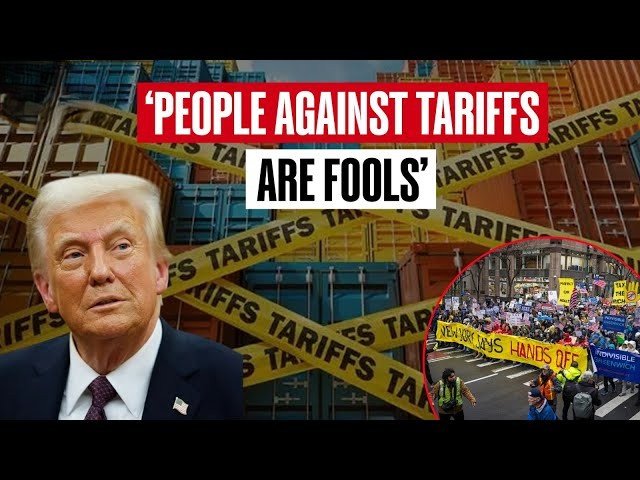
Global Dispatch Tuesday, 17 March 2026  ·  Economy & Trade  ·  Special Report The Tariff WarNobody Wins Trump’s tariffs were struck down by the Supreme Court, reimposed the same afternoon, and are now being rebuilt through a maze of legal workarounds. Every American household is paying the price. So is the rest of the world. Global Dispatch · 17 March 2026 · Economy & Trade Report Economy & Trade  ·  United States  ·  Global Markets  ·  Trade Policy  ·  Small Business  ·  US China Relations The Story So Far In the space of a single afternoon on 20 February 2026, the Supreme Court of the United States struck down Trump’s sweeping tariff regime, and Trump signed a new one. That tells you everything you need to know about where this is heading. The tariff war that Trump launched in early 2025 has been the most consequential, chaotic, and contested trade policy the United States has seen in a generation. It has raised prices on everything from groceries to cars to prescription drugs. It has cost small businesses hundreds of thousands of dollars. It has rattled global markets, broken trade deals, and set off retaliatory measures from Canada, China, Mexico, and the European Union. And now, after the highest court in the land said much of it was illegal, the administration did not blink. It found a different law, signed a new order within hours, and told the world that tariff revenue “will not go down.” This is not a trade policy. It is a statement of intent. And its consequences, for Americans and for the global economy, are still unfolding. Avg Household Cost $2,512 Per US household in 2026 if tariffs hold — up 44% from 2025 — Yale Budget Lab Small Biz Annual Cost $500K+ Projected tariff burden per importing small business in 2026 — Center for American Progress IEEPA Refunds Owed $175B Estimated refunds owed to importers after IEEPA tariffs were ruled illegal by SCOTUS Section 122 Rate 10–15% New global tariff in force for up to 150 days from Feb 24, 2026 — White House China Combined Rate 35% Section 232 plus Section 122 tariff on Chinese goods entering the US market SCOTUS Vote 6–3 Supreme Court majority that struck down Trump IEEPA tariffs on February 20, 2026 Cargo containers at the Port of Los Angeles. Tariffs added 3.1 percentage points to the average effective US import rate in 2025. After the Supreme Court ruling, the rate dropped temporarily before new Section 122 duties began. Photo: AFP / Getty Images 01 The Legal Battle  ·  February to March 2026 The Court Said No. He Had a New Order Ready Within Hours. On the morning of 20 February 2026, six Supreme Court justices agreed on something that had seemed obvious to many legal scholars for months: tariffs are a form of taxation, and under Article I of the US Constitution, the power to tax belongs to Congress, not the President. The 6-3 ruling struck down Trump’s sweeping “reciprocal” tariffs, which he had imposed on nearly every country in the world using the International Emergency Economic Powers Act, a 1977 law designed for specific national security emergencies, not a wholesale rewrite of global trade. Trump’s reaction was immediate and revealing. He called the ruling “a total disgrace.” He attacked Justices Neil Gorsuch and Amy Coney Barrett, his own nominees, for voting with the majority. Then, within hours, he signed a new executive order imposing a 10 percent global tariff under a completely different statute: Section 122 of the Trade Act of 1974. By Saturday he was on Truth Social announcing 15 percent. By Tuesday, US Customs was collecting the new rate at midnight. “Pure tariff chaos from the US administration,” wrote Bernd Lange, a senior EU lawmaker on Sunday. “No one can make sense of it anymore.” Section 122 comes with hard limits: tariffs cannot exceed 15 percent and can last no longer than 150 days. Any extension requires an act of Congress. Treasury Secretary Scott Bessent brushed this off, insisting that “no one should expect tariff revenue to go down.” On 11 March the administration announced 16 new Section 301 trade investigations targeting China, Mexico, the EU, and 13 other economies. The aim is clear: rebuild the tariff wall through slower, legally sturdier mechanisms before the clock expires. The ruling also created an enormous financial problem the administration had not publicly anticipated. Most trade framework deals struck since early 2025 were negotiated under IEEPA authority, meaning they are now legally void. The EU froze implementation of its agreement within days. China’s embassy spokesperson noted that Beijing had actually achieved a lower tariff rate without making any concessions whatsoever. “China will definitely feel it has the upper hand going into negotiations,” said one trade lawyer briefed on the situation. “As President, I do not have to go back to Congress to get approval of tariffs. It has already been gotten.” President Donald Trump, Truth Social, February 2026 Background — What Is Section 122? Section 122 of the Trade Act of 1974 allows the President to impose a temporary import surcharge of up to 15 percent to address a balance-of-payments crisis or prevent a significant dollar depreciation. It requires no congressional approval to start, but expires after 150 days unless Congress extends it. Trump’s use of it to address a trade deficit, rather than a currency emergency, is already being challenged in court by two businesses as of mid-March 2026. Legal experts say this challenge has a stronger basis than the administration is publicly acknowledging. Jan 2025 Trump signs America First Trade Policy memorandum on day one of his second term, directing all cabinet secretaries to review trade practices and prepare sweeping tariff recommendations. Early 2025 IEEPA tariffs imposed on virtually all US trading partners, ranging from 10 to 50 percent. Canada, Mexico, China, and the EU begin retaliatory measures. Global markets enter a prolonged period of uncertainty. Aug 2025 US Court of Appeals for the Federal Circuit rules

Trump Tariffs 2026: The Trade War Nobody Wins | Global Dispatch Read More ยป

World War Update March 2026: Iran, Gaza, Ukraine and Sudan – What’s Really Happening

World War Update March 2026: Iran, Gaza, Ukraine and Sudan – What’s Really Happening

Global Dispatch Saturday, 14 March 2026  ·  Special Report The Worldat War A comprehensive dispatch on every major armed conflict raging across the globe, from the burning streets of Tehran to the rubble of Gaza, the trenches of eastern Ukraine, and the forgotten catastrophe of Sudan. Researched and written 14 March 2026  ·  All figures sourced from live reporting US and Israel vs. IranDay 14 of strikes Gaza and LebanonCeasefire collapsing Russia and UkraineDay 1,478 SudanNearly 1,000 days of war Editor’s Brief Four wars. Hundreds of thousands dead. A planet’s attention fractured beyond precedent. March 2026 stands as one of the most dangerous months in recent memory. A two-week-old US-Israeli military campaign against Iran has ignited the broader Middle East, disrupted global energy flows, and pulled diplomatic oxygen away from every other crisis on Earth. In Gaza, a ceasefire that was supposed to end the bloodshed lies in ruins. Lebanon burns again. Ukraine quietly records its first territorial gains in years, even as Russian missiles kill children in Kharkiv. And in Sudan, a war that has displaced more people than any other on the planet, drone strikes are now hitting hospitals and schools, largely unseen by a world consumed elsewhere. What follows is a clear-eyed account of each theatre: what is happening, why it matters, and what comes next. 01 Middle East  ·  Active since 28 February 2026 The US and Israel Take the Fight to Iran Killed in Iran1,444Iran Health Ministry, Mar 13 Injured in Iran18,551+Ages from 8 months to 88 years US Fatalities11Including a refuelling crash in Kuwait Displaced in Iran3.2MUNHCR estimate, Mar 12 Oil price surge+40%Since strikes began On 28 February 2026, the United States and Israel launched coordinated strikes against Iran with the declared aim of regime change and the elimination of Tehran’s nuclear and ballistic missile programmes. The opening salvo killed Supreme Leader Ali Khamenei, a development that sent shockwaves through the Islamic Republic and across the entire region. Two weeks on, the conflict shows no sign of slowing down. Heavy Israeli strikes have repeatedly hit Tehran, with explosions reported near a pro-government rally attended by senior officials. Iran’s new supreme leader, Mojtaba Khamenei, was elected by the Assembly of Experts on 8 March to succeed his assassinated father. He issued his first formal statement warning that attacks on US military assets will continue unless bases hosting American forces are closed. President Trump called him a “lightweight” and suggested he “would not last long” without Washington’s approval. Iran’s retaliation has been sweeping. The Islamic Revolutionary Guard Corps says it has launched attacks on at least 27 US military bases across the Middle East, as well as Israeli military installations. Kuwait, the UAE, Saudi Arabia, Bahrain, Qatar, and Oman have all faced Iranian drone and missile strikes. At least 16 oil tankers and cargo ships have been attacked in and around the Strait of Hormuz, the Arabian Gulf, and the Gulf of Oman, effectively shutting down one of the world’s most critical energy corridors. The human cost inside Iran is staggering. Tehran’s representative to the United Nations says US and Israeli forces have struck nearly 10,000 civilian sites. The World Health Organization has warned of toxic “black rain,” polluted rainfall formed when smoke from burning fuel depots mixes with cloud cover, posing acute health risks to populations across the country. Internet connectivity inside Iran dropped to just 4 percent of normal levels in the conflict’s opening days, making independent verification extraordinarily difficult. “Russia is giving Iran specific advice on drone tactics, helping Tehran to hit US and Gulf nation targets. This is a new level of support that goes beyond general intelligence sharing.” Western intelligence official, quoted by CNN, 11 March 2026 The geopolitical realignment accelerated by the conflict is stark. Russia, which deepened ties with Tehran after its 2022 invasion of Ukraine and later cemented a 20-year Comprehensive Strategic Partnership Treaty, is now providing specific tactical drone advice to Iranian forces. Ukraine, by contrast, has positioned itself firmly on the other side of this fight. President Zelenskyy announced that counter-drone teams have been deployed to protect US and allied bases in the region, and that 11 countries have formally requested Ukraine’s anti-drone expertise and interceptor technology. The economic fallout is spreading globally. Oil prices have surged more than 40 percent since February 28. The International Energy Agency agreed to release a record 400 million barrels of crude oil in response. US average petrol prices reached a 22-month high. Qatar Airways temporarily suspended operations before launching emergency repatriation flights. Dubai International Airport was struck by Iranian drones. Australia ordered all non-essential officials to leave the UAE and Israel. Iran has outlined three conditions for ending hostilities: recognition of its “legitimate rights,” payment of reparations, and firm international guarantees against future aggression. The US Defense Secretary has said joint strikes have “significantly diminished” Iran’s military capacity, a claim Tehran flatly contests. Political pressure is mounting in Washington, where lawmakers are demanding hearings on the war’s objectives as US casualties rise and civilian strike investigations multiply. Feb 28US and Israeli strikes begin. Supreme Leader Ali Khamenei is killed in the opening salvo targeting the Leadership House compound. Mar 1Iran launches a ballistic missile strike on Beit Shemesh in central Israel, killing 9. Iranian drones hit Abu Dhabi port infrastructure. Mar 3 to 4Iran has now fired over 500 ballistic missiles and nearly 2,000 drones since the war began. The rate of launches slows as missile stocks deplete. Mar 8Mojtaba Khamenei is elected as Iran’s new supreme leader. IRGC commanders and top officials pledge allegiance. Mar 11Iran and Hezbollah carry out a joint five-hour sustained strike on more than 50 targets across Israel. The IEA releases a record 400 million barrels of crude oil. Mar 13Israel destroys a bridge in Lebanon and drops leaflets over Beirut threatening Gaza-scale destruction. The death toll in Lebanon reaches 773 since March 2. 02 Middle East  ·  Ongoing since October 2023 Gaza, Lebanon and the Ceasefire That Never Held Killed in Gaza72,123+Since

World War Update March 2026: Iran, Gaza, Ukraine and Sudan – What’s Really Happening Read More ยป

Scroll to Top