

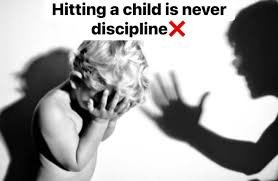
Look, I’m going to be real with you. Parenting in Australia is bloody hard. The cost of living is insane, work never stops, and somehow we’re supposed to raise well-behaved kids without losing our minds or resorting to what our parents did.
You’ve probably wondered: “How the hell do I discipline my kids without smacking them?” Especially when little Timmy’s having a meltdown in Woolies for the third time this week, and everyone’s staring at you like you’re the world’s worst parent.
Here’s the good news: Australian researchers have actually figured this out. And it works better than the old “wait till your father gets home” approach.
First, Let’s Talk About the Law (Because You’re Probably Wondering)
Right now in Australia, it’s still technically legal to use “reasonable” physical punishment on your kids. But here’s the catch what counts as “reasonable” is getting stricter every year, and courts are cracking down harder.
Plus, modern research shows that smacking actually screws kids up more than it helps. The University of Melbourne found that corporal punishment contributes to mental health issues and anti-social behaviour down the track.
Bottom line: You won’t get arrested for a smack on the bum, but there are way better options that won’t mess with your kid’s head or get Child Services knocking on your door.
What Actually Works: The Triple P Program
The biggest game changer in Australian parenting right now? It’s called Triple P (Positive Parenting Program), developed right here at the University of Queensland.
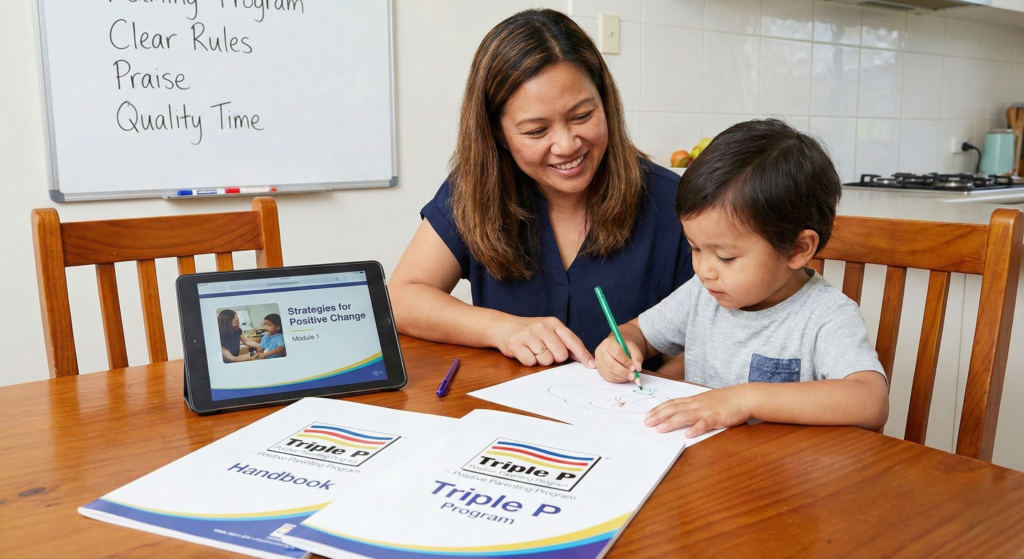
Get this: They tested it on over 4,500 Aussie parents across SA, QLD, and Victoria. The results? Kids’ behaviour improved dramatically, anxiety and depression symptoms dropped, and 94% of parents said they were happy with the results.
Even better? It’s free. You can do the courses online or through local community centres.
Check out Triple P here or call Parentline on 1300 30 1300 for help.
7 Things That Actually Work (Tested by Real Aussie Parents)
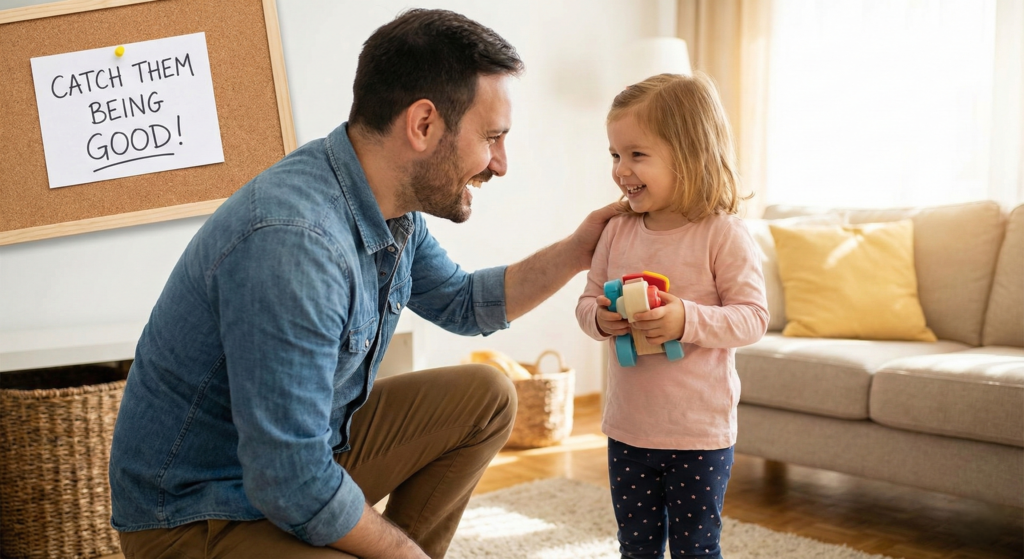
1. Catch Them Being Good
I know, I know, it’s way easier to notice when they’re being little shits. But here’s the trick: kids repeat whatever gets your attention.
Instead of: Ignoring them when they’re playing quietly, then yelling when they fight
Try this: “Mate, I noticed you shared your toys with your brother. That was really kind of you.”
Be specific. Not just “good job,” but exactly what they did right. And throw in a quick cuddle while you’re at it.
2. Set Clear Rules (And Actually Stick to Them)
Kids aren’t mind readers. They need to know what’s expected.
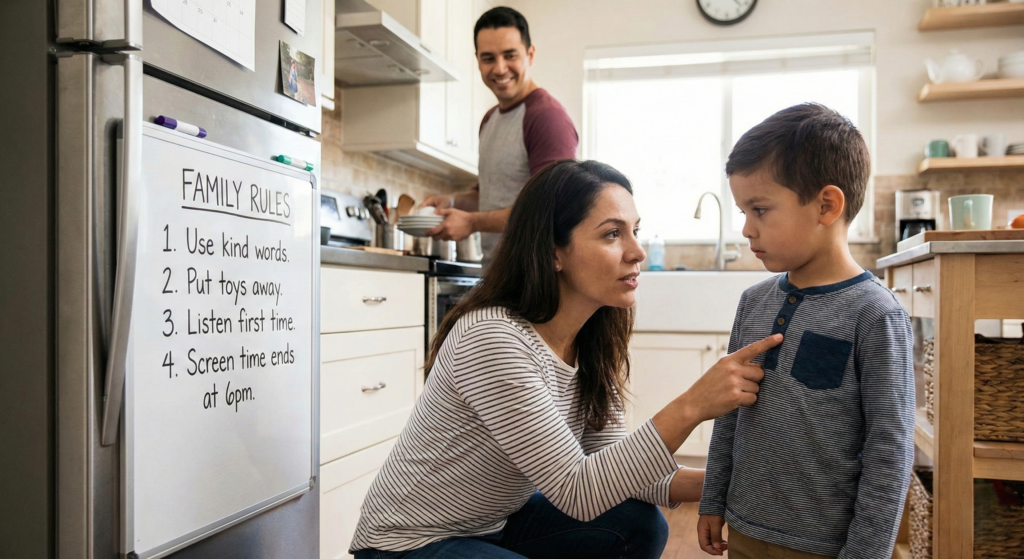
Real example:
Before heading to Coles, don’t just say “behave yourself.” Try this: “At the shops, we use walking feet, inside voices, and we don’t grab things off the shelves. If you can do that, we’ll pick one treat together at the end.”
Then and this is the hard part you actually have to follow through. Every. Single. Time.
3. Remember: Their Brains Aren’t Finished Yet
Here’s something they don’t tell you at antenatal classes: kids’ brains are still cooking. A 3 year old literally cannot control their emotions yet that part of the brain isn’t developed.
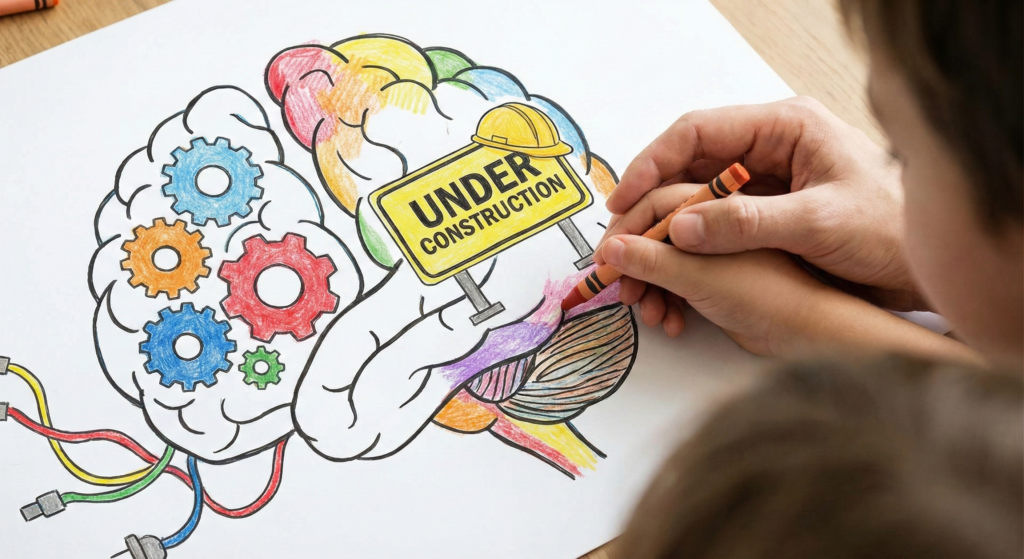
What this means:
- Your toddler’s tantrum at Target? That’s not them being “naughty” they genuinely can’t regulate their feelings yet
- Your 5 year old struggling to share? Normal. Perspective-taking is still developing
- Your 8 year old forgetting stuff constantly? Their executive function is a work in progress
Cut them some slack. You wouldn’t yell at a baby for not walking, right? Same deal with emotional regulation.
4. Use Consequences That Make Sense
Forget smacking. Use consequences that actually relate to what they did wrong:
Natural consequences:
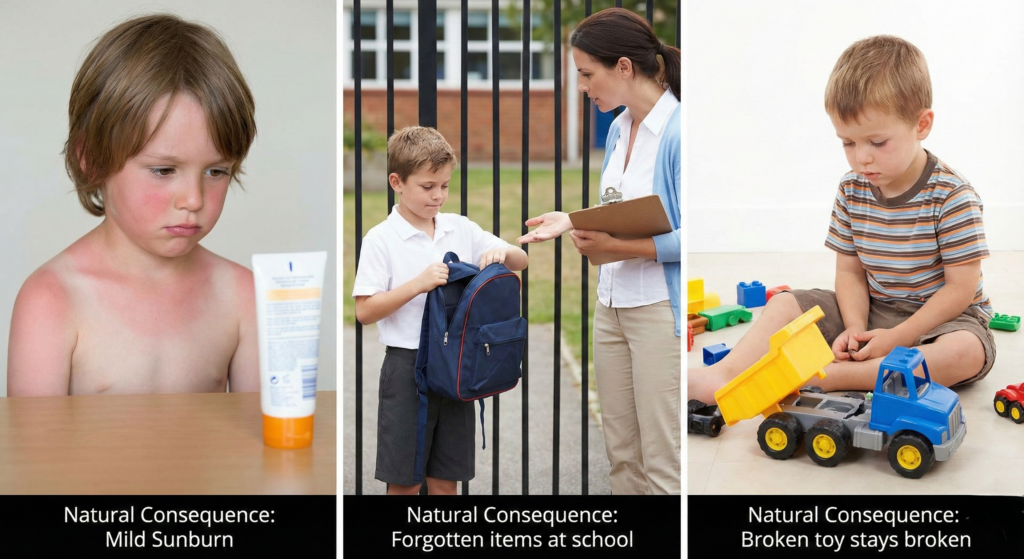
- Won’t wear sunscreen? They get sunburnt (not badly, obviously)
- Refuse to pack school bag? They face the music at school
- Break a toy being rough? Toy stays broken
Logical consequences:
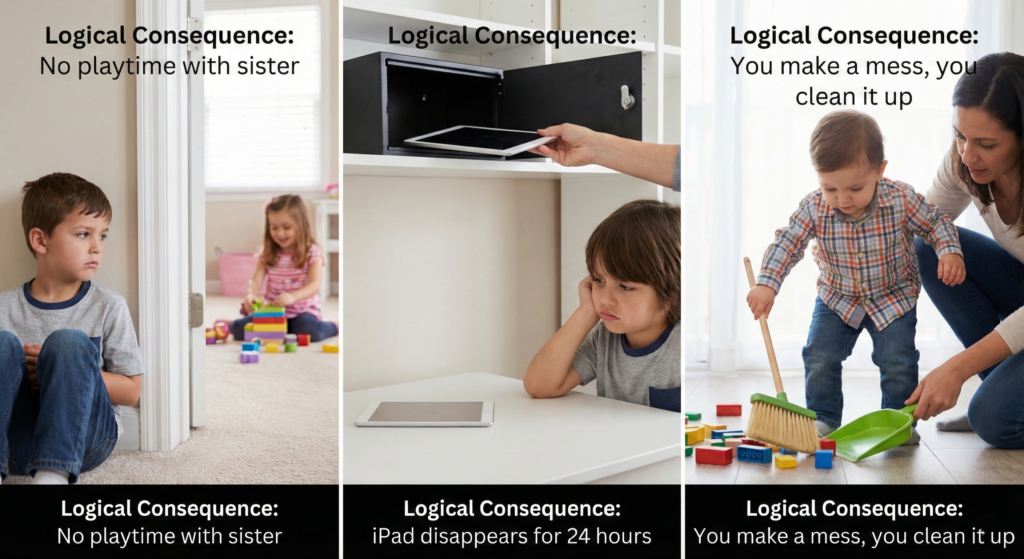
- Hit their sister? No playtime with sister for the rest of the day
- Won’t get off the iPad? iPad disappears for 24 hours
- Make a mess? They clean it up (with your help if needed)
The key? Make it immediate and related to what they did.
5. “Time-In” Instead of “Time-Out”
Traditional time outs? They often make things worse. Try this instead:
When your kid loses it, sit with them. Help them name what they’re feeling: “You’re really angry because I said no to the lolly, aren’t you?”
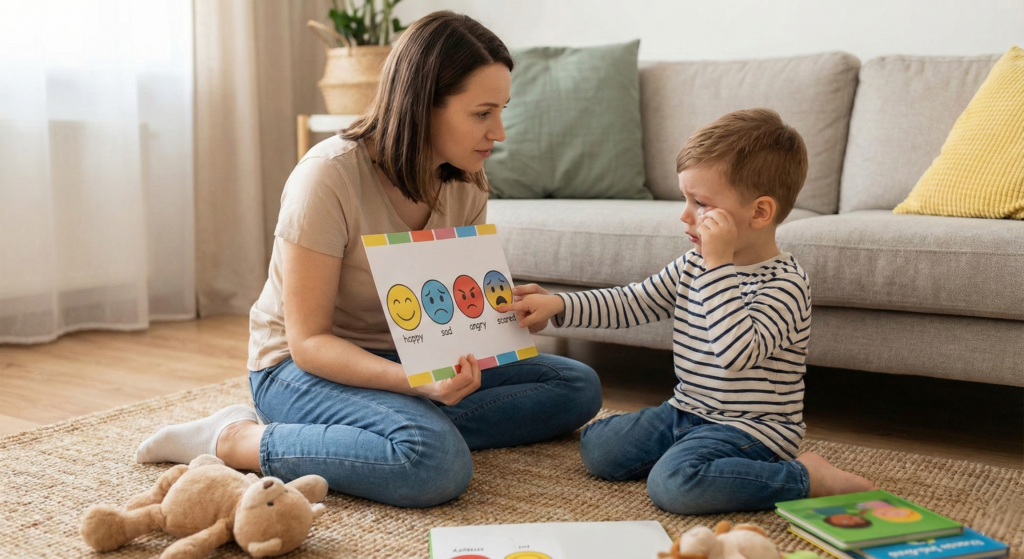
Then teach them how to calm down: deep breaths, counting to ten, squeezing a stress ball.
Why this works: You’re teaching them how to handle emotions instead of just punishing them for not knowing how.
6. Routines Are Your Best Mate
Most “bad behaviour” happens when kids are tired, hungry, or caught off guard. Prevent the drama with solid routines:
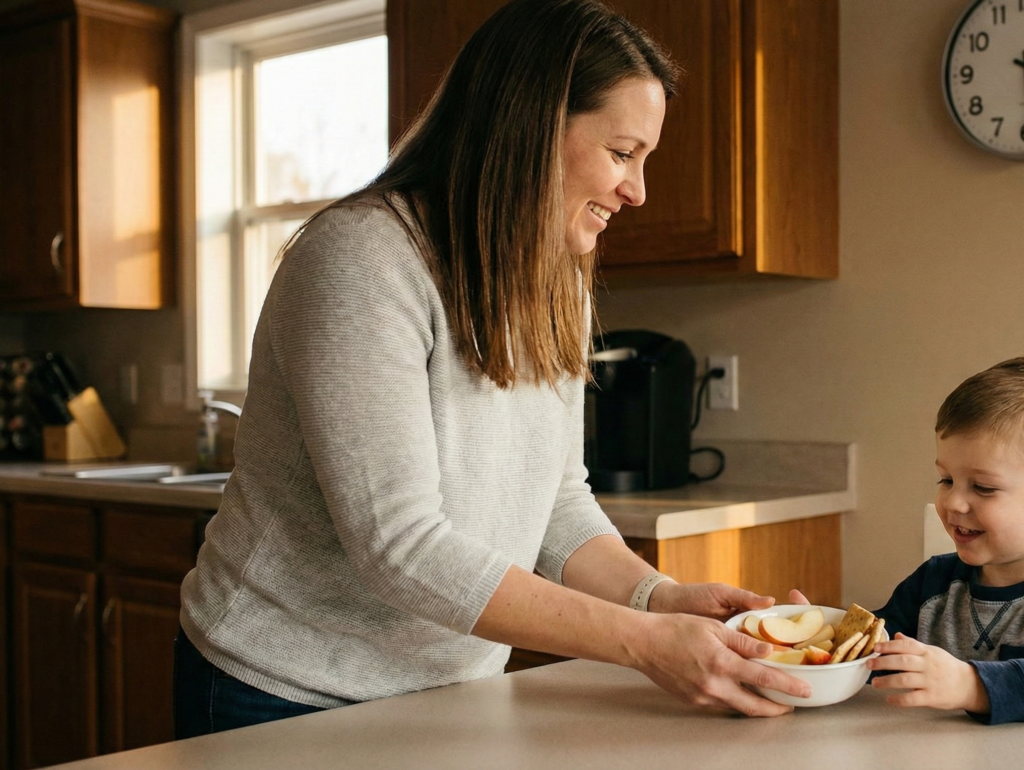
- Morning routine chart (use pictures for younger kids)
- Consistent meal and bedtime schedules
- Give warnings before transitions: “Five more minutes at the park, then we’re going”
- Use visual timers so they can actually see time passing
Pro tip: Most tantrums at my place happen around 5pm. I started having snacks ready at 4:30pm and magic way fewer meltdowns.
7. Give Them Choices (But Keep Control)
Kids want to feel like they have some say. Give them options within boundaries you’re comfortable with:
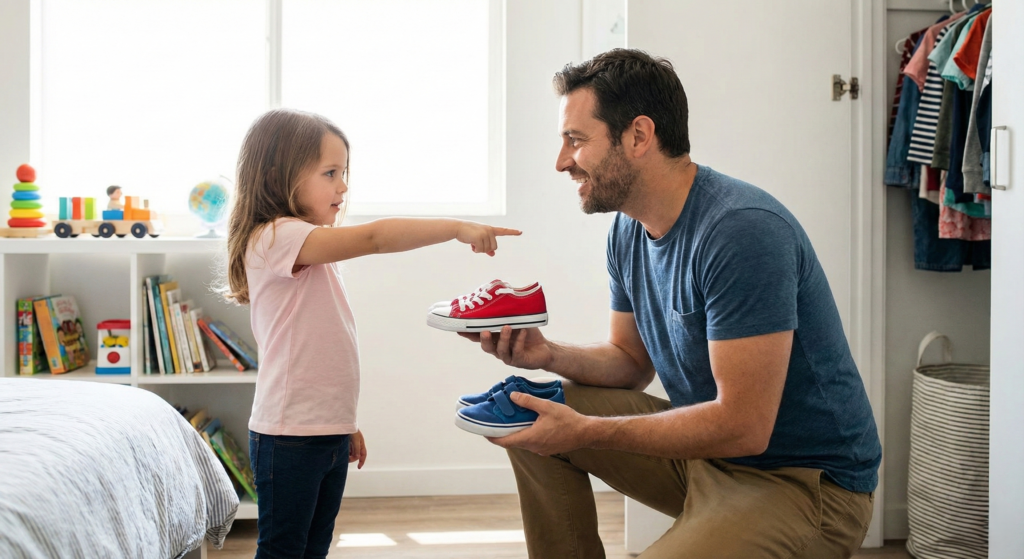
For toddlers:
- “Do you want Weet Bix or toast for brekky?”
- “Should we read one book or two before bed?”
For older kids:
- “You can do homework before or after dinner you choose”
- “Your room needs to be clean by 5pm. You decide when to do it”
Why this works: They feel in control, but you’re still the parent setting the boundaries.
What About the Big Stuff? Tantrums and Major Drama
When your kid completely loses it:
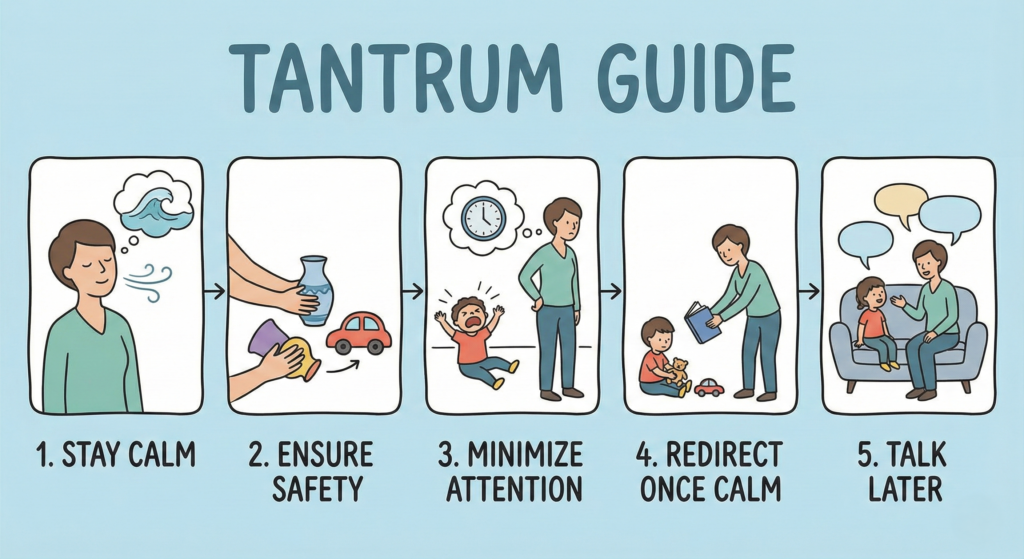
- Stay calm (easier said than done, I know)
- Make sure they’re safe (move breakable stuff, clear some space)
- Give minimal attention during the actual tantrum (don’t reward it)
- Redirect once they’re calm to something fun
- Talk about it later when everyone’s chilled out
For serious misbehaviour:
- State the rule calmly: “We don’t hit people”
- One warning with clear consequence: “If you hit again, we’re leaving the park”
- Follow through immediately if it happens again
- Talk about it later: “What could you do differently next time you’re angry?”
Quick Guide by Age
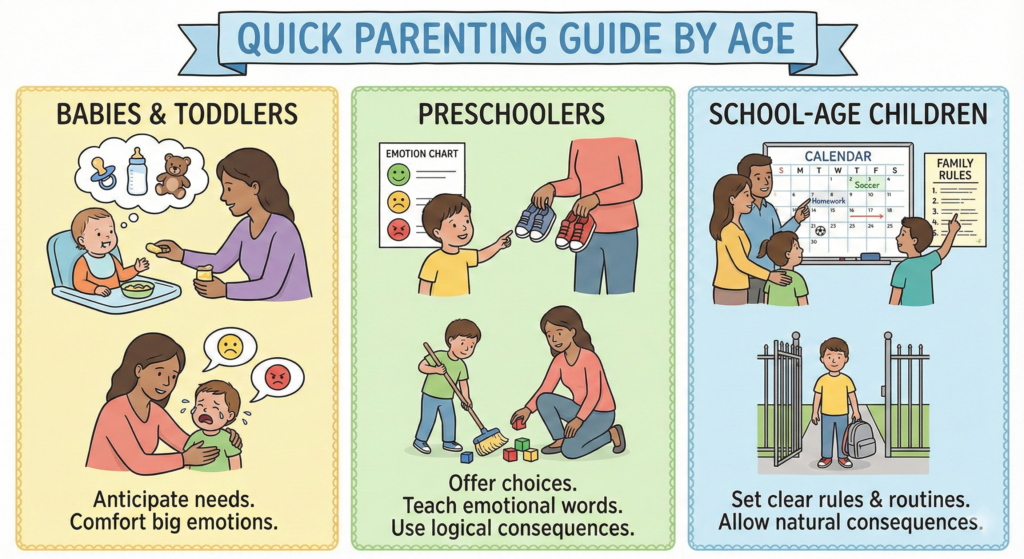
Toddlers (1-3): Distraction is your friend. Keep rules simple (3-5 max). Pick your battles—seriously, not everything matters.
Preschoolers (3-5): Use “when/then”: “When you pick up toys, then we can go outside.” Praise like crazy. Teach emotion words.
Primary School (5-12): Let them help make rules. Use logical consequences. Teach problem-solving. Give them more freedom within boundaries.
Teens (12-18): Focus on keeping the relationship strong. Let natural consequences teach them. Negotiate where appropriate. Pick your battles carefully.
Free Help Available in Australia
Resources that won’t cost you a cent:
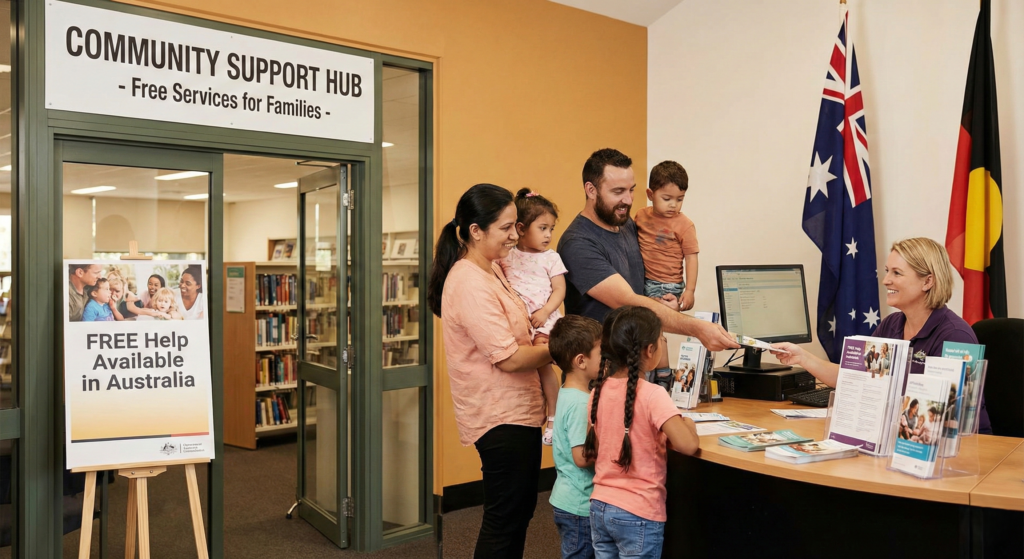
- Triple P Online: triplep.net/glo-en
- Parentline: 1300 30 1300 (counsellors who actually know their stuff)
- Pregnancy, Birth and Baby: 1800 882 436 (nurses available 24/7)
- Raising Children Network: raisingchildren.net.au (amazing Australian parenting website)
Your local council also runs free parenting programs. Google “parenting courses [your suburb]” and you’ll find stuff near you.
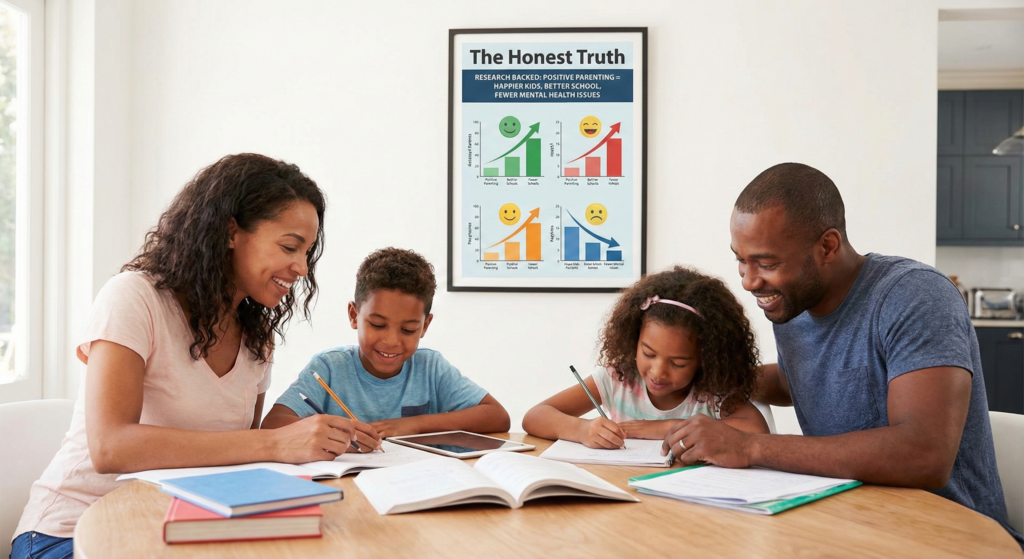
The Honest Truth
Look, I’m not going to lie to you. Positive parenting is bloody hard work, especially at first. It takes about 3-6 weeks of consistency before you’ll see real change. You’ll have days where you want to throw in the towel. Your kids will test every boundary you set. You’ll screw up and yell sometimes.
But here’s what happens when you stick with it:
- Your relationship with your kids actually improves
- There’s way less yelling in your house
- Your kids learn to handle their emotions better
- Fewer massive blow-ups over time
The research backs this up: multiple studies show that authoritative parenting (warm but with clear boundaries) leads to better academic outcomes, improved social skills, and stronger emotional wellness in children. Kids raised with positive parenting exhibit stronger emotional resilience and are less likely to develop depression and anxiety. A meta-analysis of 39 studies found that parental involvement had a positive and moderate effect on children’s overall performance, including mental health.
Start Small (Like, Really Small)
Don’t try to change everything at once. That’s a recipe for burnout.
Here’s what to do:
- Pick ONE thing from this list
- Do it consistently for two weeks
- Once it’s a habit, add another one
- Give yourself grace when you mess up (because you will, we all do)
Your kids don’t need a perfect parent. They need someone who’s trying their best, showing up consistently, and willing to learn alongside them.
Quick FAQ
Q: What if my partner still believes in smacking?
Show them the research. Australian studies prove positive parenting works better long term. Have a calm conversation about what you both want for your kids’ futures.
Q: What about in public when everyone’s watching?
Screw what other people think. Stay calm, follow through with your consequence, and leave if you need to. Other parents judging you probably have their own struggles.
Q: Does this actually work with strong-willed kids?
Yes, but it takes longer. Consistency is even more important. Strong willed kids often respond well to choices and having some control.
Q: How long before I see results?
Usually 2-4 weeks if you’re really consistent. Some kids respond faster, some slower. Stick with it.
References
Australian Research:
- University of Adelaide – Triple P Study Results
- Australian Institute of Family Studies – Physical Punishment Info
- University of Melbourne – Corporal Punishment Research
International Research on Positive Parenting Outcomes:
- Meta-analysis: Parental Involvement & Child Mental Health – 39 studies showing positive effects on child performance
- Authoritative Parenting Impact Study – Academic achievement & mental health outcomes
- Parent Involvement & Academic Performance – NIMH-funded longitudinal research
- Positive Parenting & Child Mental Health Guide – Research on emotional resilience
- Parents Plus Programme Evaluation – Controlled trial showing reduced behaviour problems
Free Resources:
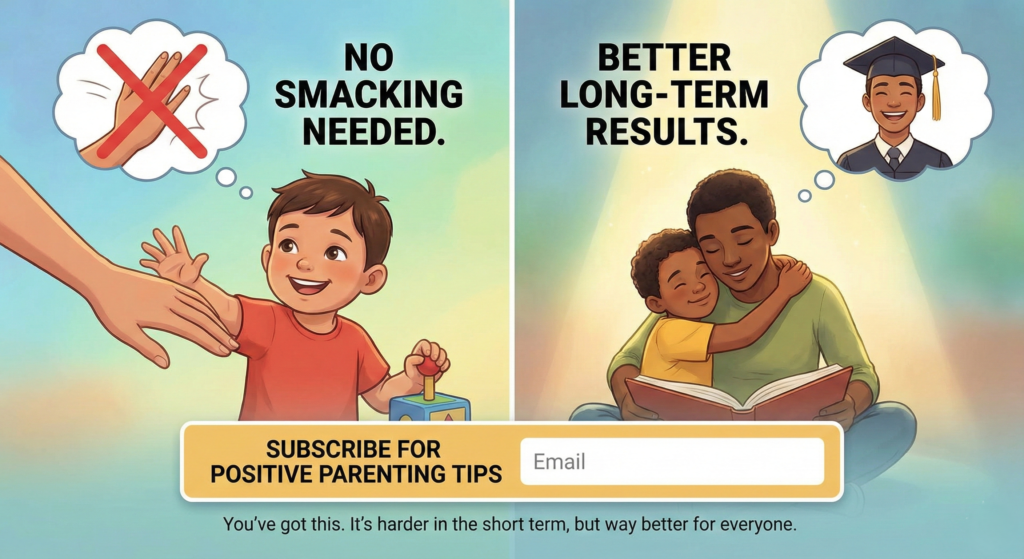
The Bottom Line: You don’t need to smack your kids to raise them well. It’s harder in the short term, but way better for everyone in the long run. You’ve got this.