The World
at War
A comprehensive dispatch on every major armed conflict raging across the globe, from the burning streets of Tehran to the rubble of Gaza, the trenches of eastern Ukraine, and the forgotten catastrophe of Sudan.
Four wars. Hundreds of thousands dead. A planet’s attention fractured beyond precedent.
March 2026 stands as one of the most dangerous months in recent memory. A two-week-old US-Israeli military campaign against Iran has ignited the broader Middle East, disrupted global energy flows, and pulled diplomatic oxygen away from every other crisis on Earth.
In Gaza, a ceasefire that was supposed to end the bloodshed lies in ruins. Lebanon burns again. Ukraine quietly records its first territorial gains in years, even as Russian missiles kill children in Kharkiv. And in Sudan, a war that has displaced more people than any other on the planet, drone strikes are now hitting hospitals and schools, largely unseen by a world consumed elsewhere.
What follows is a clear-eyed account of each theatre: what is happening, why it matters, and what comes next.
The US and Israel Take the Fight to Iran
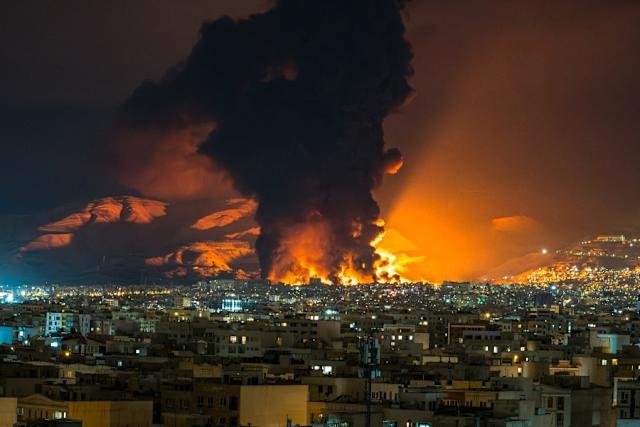
On 28 February 2026, the United States and Israel launched coordinated strikes against Iran with the declared aim of regime change and the elimination of Tehran’s nuclear and ballistic missile programmes. The opening salvo killed Supreme Leader Ali Khamenei, a development that sent shockwaves through the Islamic Republic and across the entire region.
Two weeks on, the conflict shows no sign of slowing down. Heavy Israeli strikes have repeatedly hit Tehran, with explosions reported near a pro-government rally attended by senior officials. Iran’s new supreme leader, Mojtaba Khamenei, was elected by the Assembly of Experts on 8 March to succeed his assassinated father. He issued his first formal statement warning that attacks on US military assets will continue unless bases hosting American forces are closed. President Trump called him a “lightweight” and suggested he “would not last long” without Washington’s approval.
Iran’s retaliation has been sweeping. The Islamic Revolutionary Guard Corps says it has launched attacks on at least 27 US military bases across the Middle East, as well as Israeli military installations. Kuwait, the UAE, Saudi Arabia, Bahrain, Qatar, and Oman have all faced Iranian drone and missile strikes. At least 16 oil tankers and cargo ships have been attacked in and around the Strait of Hormuz, the Arabian Gulf, and the Gulf of Oman, effectively shutting down one of the world’s most critical energy corridors.
The human cost inside Iran is staggering. Tehran’s representative to the United Nations says US and Israeli forces have struck nearly 10,000 civilian sites. The World Health Organization has warned of toxic “black rain,” polluted rainfall formed when smoke from burning fuel depots mixes with cloud cover, posing acute health risks to populations across the country. Internet connectivity inside Iran dropped to just 4 percent of normal levels in the conflict’s opening days, making independent verification extraordinarily difficult.
The geopolitical realignment accelerated by the conflict is stark. Russia, which deepened ties with Tehran after its 2022 invasion of Ukraine and later cemented a 20-year Comprehensive Strategic Partnership Treaty, is now providing specific tactical drone advice to Iranian forces. Ukraine, by contrast, has positioned itself firmly on the other side of this fight. President Zelenskyy announced that counter-drone teams have been deployed to protect US and allied bases in the region, and that 11 countries have formally requested Ukraine’s anti-drone expertise and interceptor technology.
The economic fallout is spreading globally. Oil prices have surged more than 40 percent since February 28. The International Energy Agency agreed to release a record 400 million barrels of crude oil in response. US average petrol prices reached a 22-month high. Qatar Airways temporarily suspended operations before launching emergency repatriation flights. Dubai International Airport was struck by Iranian drones. Australia ordered all non-essential officials to leave the UAE and Israel.
Iran has outlined three conditions for ending hostilities: recognition of its “legitimate rights,” payment of reparations, and firm international guarantees against future aggression. The US Defense Secretary has said joint strikes have “significantly diminished” Iran’s military capacity, a claim Tehran flatly contests. Political pressure is mounting in Washington, where lawmakers are demanding hearings on the war’s objectives as US casualties rise and civilian strike investigations multiply.
- Feb 28US and Israeli strikes begin. Supreme Leader Ali Khamenei is killed in the opening salvo targeting the Leadership House compound.
- Mar 1Iran launches a ballistic missile strike on Beit Shemesh in central Israel, killing 9. Iranian drones hit Abu Dhabi port infrastructure.
- Mar 3 to 4Iran has now fired over 500 ballistic missiles and nearly 2,000 drones since the war began. The rate of launches slows as missile stocks deplete.
- Mar 8Mojtaba Khamenei is elected as Iran’s new supreme leader. IRGC commanders and top officials pledge allegiance.
- Mar 11Iran and Hezbollah carry out a joint five-hour sustained strike on more than 50 targets across Israel. The IEA releases a record 400 million barrels of crude oil.
- Mar 13Israel destroys a bridge in Lebanon and drops leaflets over Beirut threatening Gaza-scale destruction. The death toll in Lebanon reaches 773 since March 2.
Gaza, Lebanon and the Ceasefire That Never Held
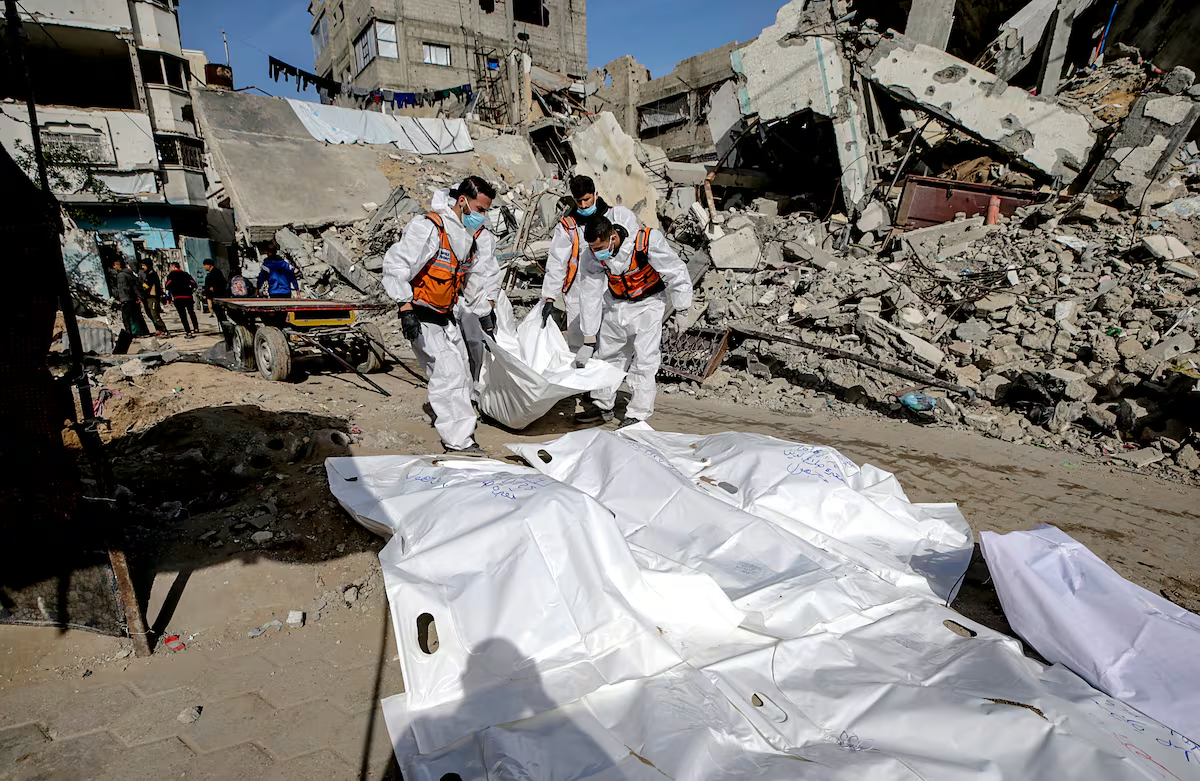
The October 11 ceasefire agreement in Gaza, brokered by the United States, has effectively fallen apart. Israel has violated it on at least 144 consecutive days, according to ceasefire monitors. Since the agreement was supposed to take effect, at least 640 Palestinians have been killed and 1,728 wounded by Israeli fire. The promise of peace has become, for Gaza’s two million residents, one more cruelty layered on top of many.
Things have been made significantly worse by the war on Iran. On 1 March, Israel closed the vital Rafah border crossing, Gaza’s only route to the outside world that does not pass through Israeli territory, citing “security adjustments.” The closure triggered panic buying across a territory already teetering on the edge of famine. The UN Secretary-General called urgently for crossings to reopen. The Kerem Shalom crossing was partially reopened on March 3 for humanitarian aid under strict supervision, but thousands of critically ill patients remain unable to leave for medical treatment abroad.
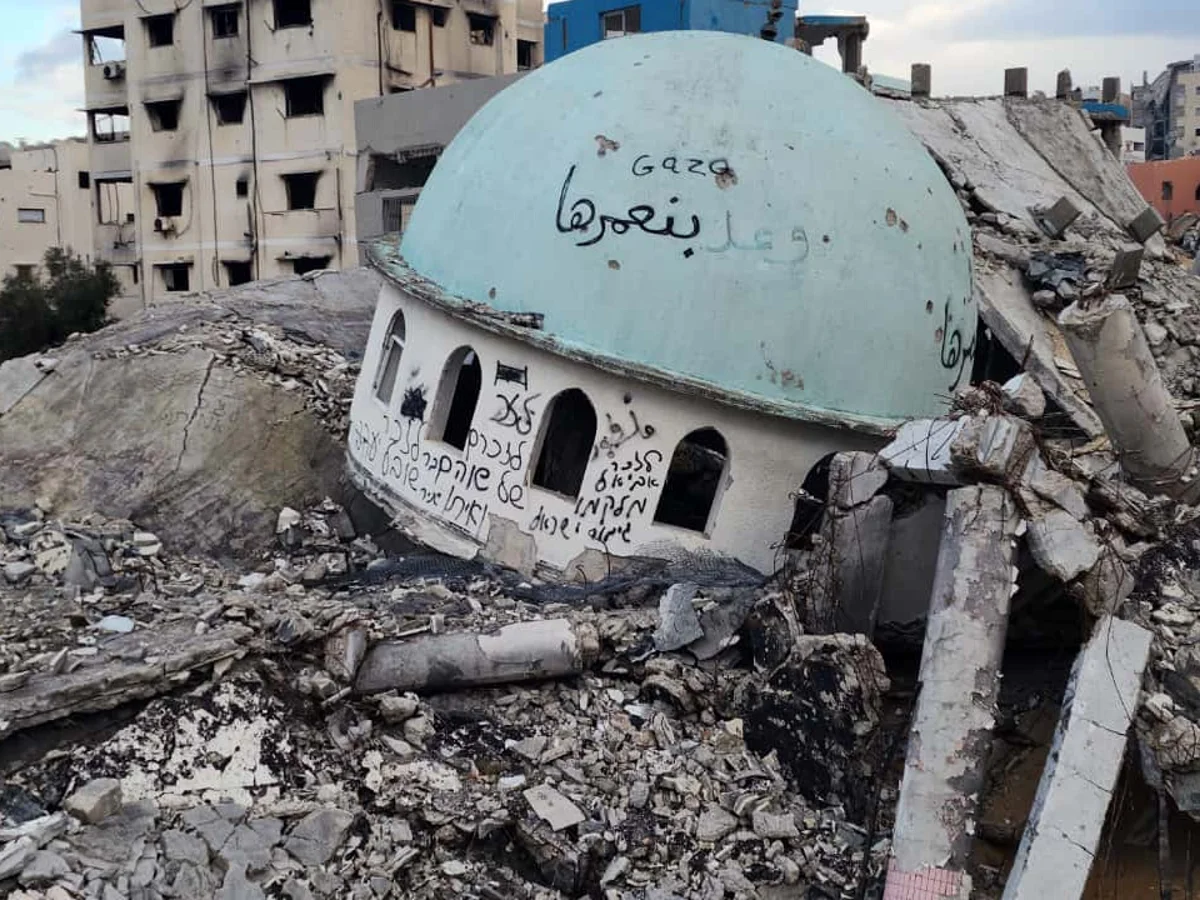
According to the latest satellite analysis by the UN Satellite Centre, roughly 81 percent of all structures in the Gaza Strip have been damaged or destroyed. More than two million Palestinians remain displaced. International human rights organisations warn that the combination of border closures, continued strikes, and the world’s attention being pulled toward Iran is creating the conditions for catastrophic famine and health system collapse.
In a February report, Amnesty International found that Palestinian women in Gaza have been “denied the conditions needed to live and to give life safely.” Pregnant women and those with terminal illness cannot access adequate medical care. Israel’s Rafah closure has also blocked the evacuation of children who urgently need treatment abroad.
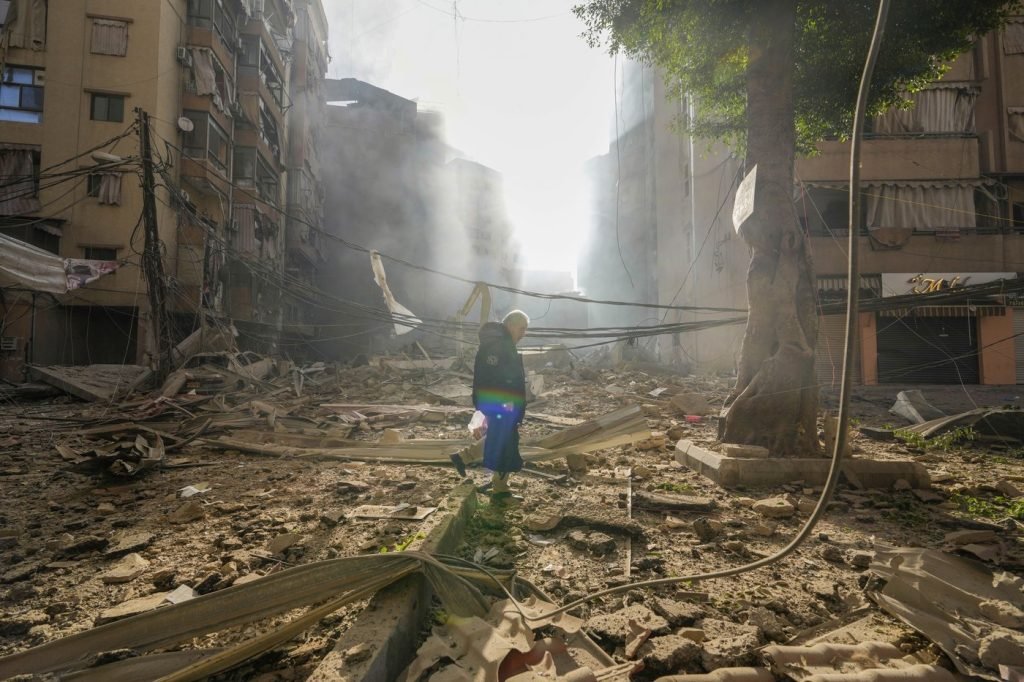
Lebanon has entered a devastating new phase. Israel’s latest offensive began on March 2, after Hezbollah launched drones and rockets into northern Israel in direct response to the strikes on Iran. Since then, 773 people have been killed, including 103 children, and another 1,933 have been wounded. Over 800,000 people, roughly one in every seven of Lebanon’s entire population, have been forced from their homes.
Israel destroyed the Zrarieh Bridge spanning the Litani River on March 13, making it the first acknowledged strike on civilian infrastructure since the current offensive began. Israeli leaflets dropped over Beirut explicitly invoked the “great success in Gaza” as a model for what Lebanon could face if it did not comply. The Lebanese Interior Minister said the scale of displacement had overwhelmed the state entirely. The Norwegian Refugee Council warned the country is “approaching a breaking point.”
In the occupied West Bank, Israeli soldiers and settlers have killed more than 1,000 Palestinians since the start of the Gaza war. Al-Aqsa Mosque in occupied East Jerusalem remains closed to worshippers, a decision Israeli authorities say is linked to the Iran war. Settler attacks on Palestinian hamlets have continued without interruption throughout.
Russia and Ukraine: Finally, the Front Begins to Shift
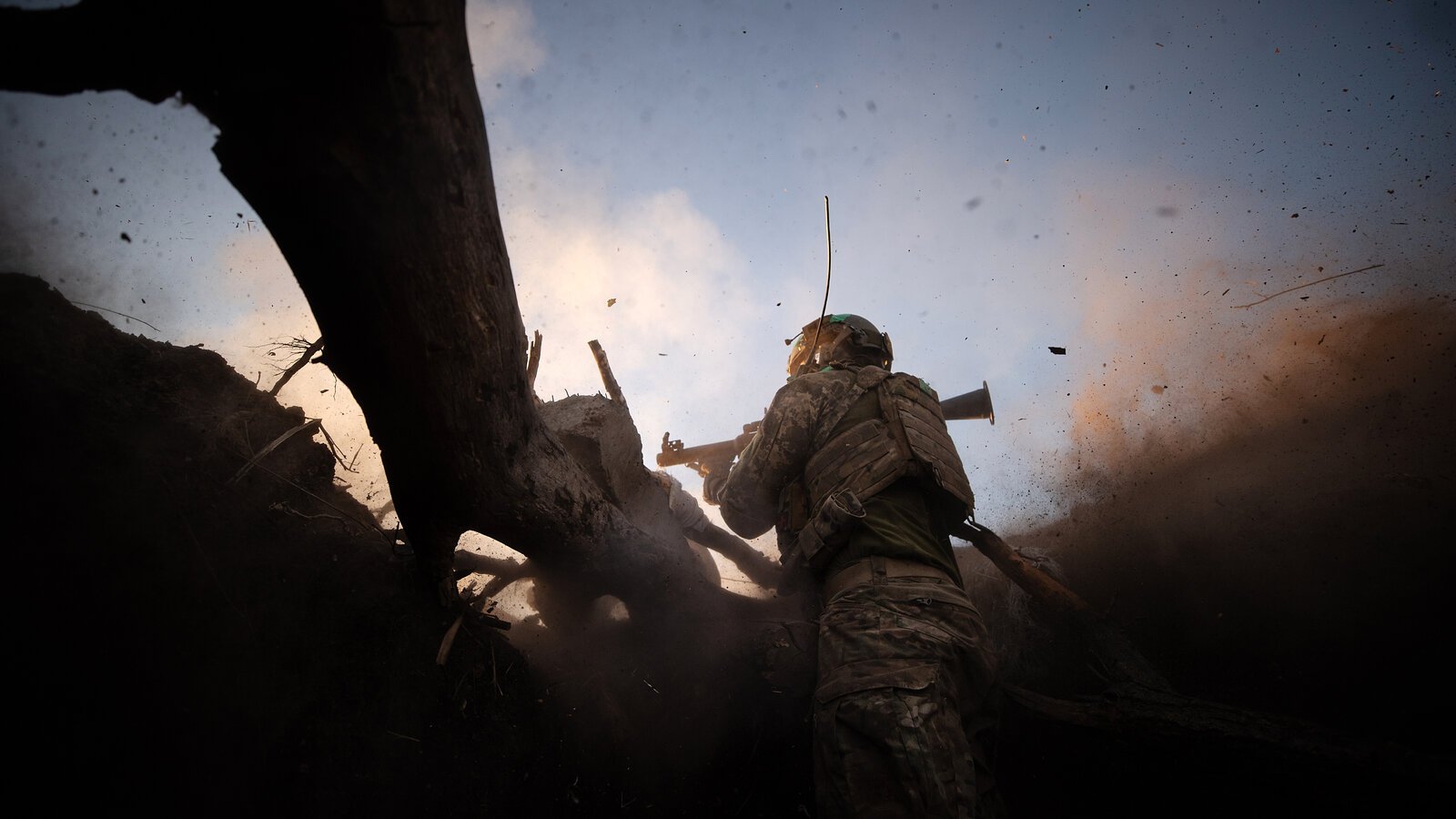
Today is day 1,478 of Russia’s full-scale invasion of Ukraine, and for the first time in over two years, the battlefield picture has shifted meaningfully in Kyiv’s favour. Ukrainian forces have reclaimed approximately 460 square kilometres of territory since January, including towns in Dnipropetrovsk and nine towns in the Zaporizhia region, where Russia had occupied almost three-quarters of the total area.
According to the Institute for the Study of War, Russia lost 57 square miles of Ukrainian territory in the four weeks between February 10 and March 10. That is a stark reversal from the 182 square miles Russia had gained in the four-week period before that. Russian territorial gains in February hit a 20-month low. President Zelenskyy has claimed Russia is losing up to 35,000 soldiers per month, telling reporters that Moscow’s losses now equal the number of newly mobilised troops it is sending to the front: “They are close to a crisis.”
The human cost of the conflict remains immense. A Russian missile strike on March 7 killed at least 10 people in Kharkiv, Ukraine’s second-largest city. Among the dead were two children: a primary school teacher and her son, a second-grader, as well as a 13-year-old girl and her mother. Prosecutors say Russia deployed the Izdyeliye-30 cruise missile and have opened a war crimes investigation.
Russia’s daily attacks continue at an extraordinary scale. In a single 24-hour period on March 10, Russian forces deployed 9,812 kamikaze drones and conducted 3,887 shellings of populated areas. Ukraine has struck back, using British-French Storm Shadow missiles to inflict heavy damage on a key Russian plant manufacturing microchips and high-end electronics for the war effort.
Russia has now occupied roughly 20 percent of Ukraine’s pre-war territory, an area approximately the size of Pennsylvania. Over the past 12 months, Russia’s average monthly territorial gain was 170 square miles, though that trend has now reversed. At least two-thirds of Ukraine’s energy production capacity has been destroyed, damaged, or occupied since late 2024.
The Iran war has opened an unexpected diplomatic dimension for Ukraine. Kyiv has deployed counter-drone teams to protect US and allied bases in the Middle East, and Zelenskyy reports 11 formal requests for Ukraine’s expertise in intercepting Shahed-type drones, the same drones Iran has been supplying to Russia since 2022. Ukraine has become, in the words of analysts, one of the world’s foremost drone warfare superpowers.
Peace talks remain deeply deadlocked. During a March 10 phone call with President Trump, Putin claimed Russian forces are advancing “rather successfully,” a claim flatly contradicted by ISW data showing Russia lost 30 square miles that very same week. Ukraine’s position is that battlefield strength must determine its hand at the negotiating table. Only 25 percent of Ukrainians believe current negotiations will lead to lasting peace.
An Al Jazeera investigation revealed that drug use on the front lines is widespread among both Russian and Ukrainian troops. It is driven by the stress of a nearly four-year war, Russia’s practice of recruiting convicts with promises of pardons, and easy access to substances via encrypted apps and cryptocurrency payments. Russia’s prison population has fallen from 433,000 in 2023 to a historic low of 308,000 today, with inmates offered freedom in exchange for front-line service.
- Feb 2026Ukrainian forces begin what officials describe as a “systemic expulsion” of Russia’s Black Sea Fleet from Novorossiysk. Drone strikes damage five warships on March 1.
- Mar 7A Russian Izdyeliye-30 cruise missile kills 10 people, including two children, in a Kharkiv apartment block strike.
- Mar 10Putin tells Trump by phone that Russian forces are advancing “rather successfully.” ISW data shows Russia lost 30 sq mi that same week.
- Mar 12Ukraine strikes a Russian electronics plant supplying microchips for missiles, using Storm Shadow weapons.
- Mar 14Day 1,478 of the full-scale invasion. The front remains active across Donetsk, Zaporizhia, and Dnipropetrovsk regions.
Sudan: A Catastrophe the World Has Chosen to Forget
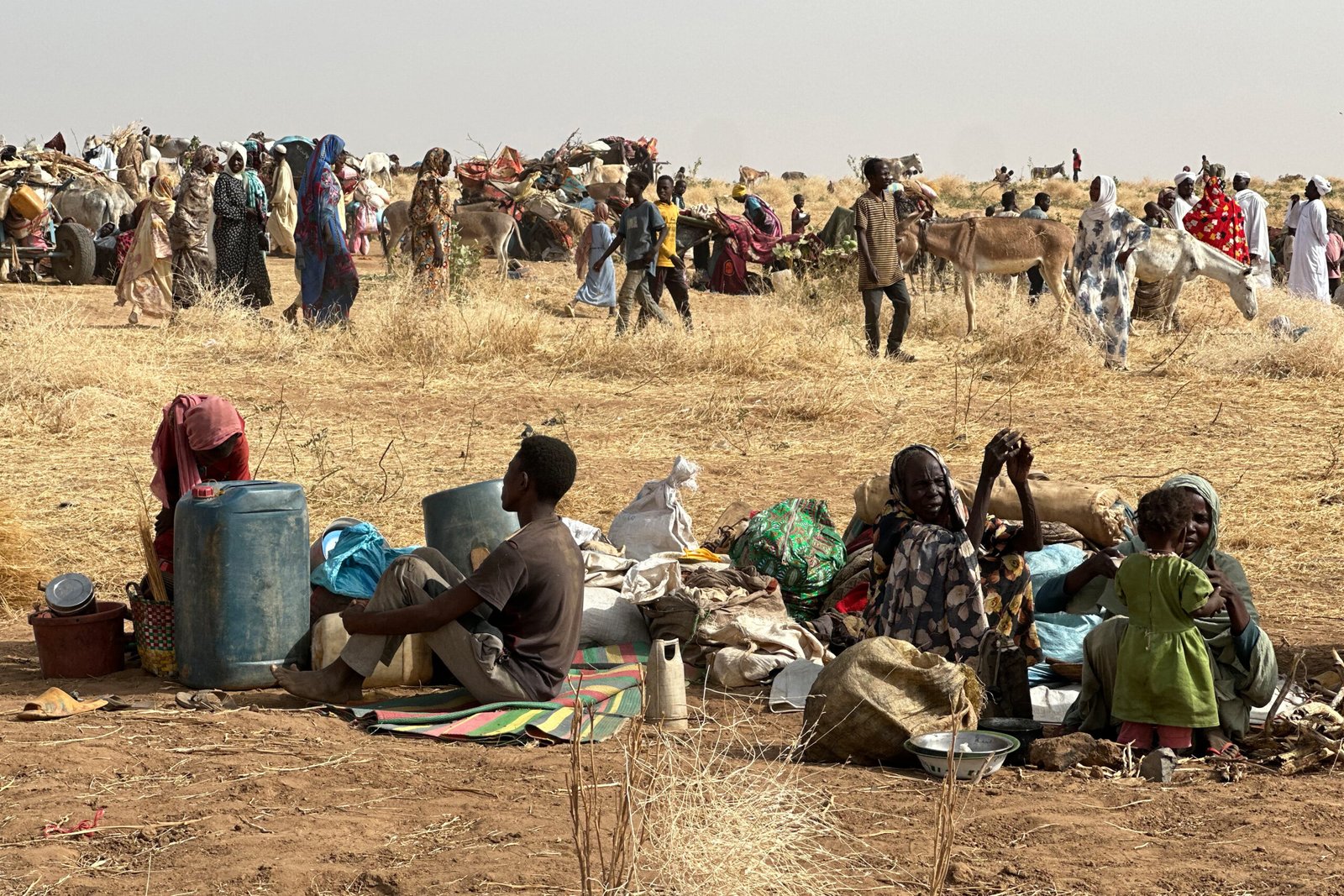
Nearly three years into a catastrophic civil war between Sudan’s Armed Forces and the Rapid Support Forces paramilitary group, Sudan has surpassed every other country in the world for the scale of its displacement crisis. Over 11 million people have been forced from their homes. More than 30 million need humanitarian assistance. The UN has declared conditions in parts of the country consistent with the world’s largest hunger crisis, yet very little of that news is making front pages today.
The conflict has entered its third major phase. After government forces recaptured Khartoum in mid-2025 and pushed the RSF out of the capital, fighting has shifted to the Kordofan corridor, a vast central region where both sides are contesting supply lines and territory with extraordinary brutality. In early 2026, the fighting intensified with near-daily drone strikes hitting markets, hospitals, and residential areas throughout the region.
On March 12, local officials and humanitarian observers blamed the RSF for a drone strike south of Khartoum that targeted a secondary school and a hospital, killing 17 civilians, most of them students. On March 9, drone strikes on crowded markets in central Kordofan killed dozens more. A separate incident documented by Doctors Without Borders showed a Sudanese Armed Forces drone strike hitting a market near the Chad border, killing four people and injuring dozens of others.
The RSF takeover of El-Fasher, the last government stronghold in the sprawling Darfur region, has been characterised by a UN report as bearing the hallmarks of genocide. Researchers at Yale’s Humanitarian Lab released satellite imagery suggesting RSF militants have engaged in a sustained, deliberate campaign to destroy agricultural production in North Darfur, a slow and calculated effort to starve communities into submission.
The international response has been woefully inadequate by virtually every measure. The UN Security Council has sanctioned just eight individuals since the conflict began in April 2023. In March, the UNSC sanctioned four RSF commanders, including Hemedti’s brother Abdul Rahim Dagalo, for atrocities committed in El-Fasher. The US State Department also designated the Sudanese Muslim Brotherhood as a foreign terrorist organisation.
There are some signs of government momentum. On March 6, Sudanese Armed Forces captured Bara, the second-largest city in North Kordofan, following a series of airstrikes and troop movements. The SAF also broke a two-year RSF siege of the town of Dilling in South Kordofan, opening a key supply route that had been blocked since the earliest days of the conflict. General al-Burhan has been touring regional capitals, including Saudi Arabia, Egypt, Turkiye, and Qatar, cementing alliances to support the military campaign.
But the government’s advances are constrained by stretched supply lines and fuel shortages, while the RSF operates close to its main bases in the west. Ethiopia, officially neutral in the conflict, is reportedly hosting a secret camp financed by the UAE to train RSF fighters. Reuters cited eight sources, including a senior Ethiopian government official, in reporting this. The camp reportedly housed 4,300 fighters as recently as January 2026.
Cultural heritage experts warn that thousands of ancient relics have been destroyed and looted as fighting continues around Khartoum, an incalculable loss to Sudan’s historical identity. Over four million displaced Sudanese have fled to Chad, Ethiopia, and South Sudan, overwhelming refugee camps in countries already under severe pressure. South Sudan itself is teetering on the edge of its own civil war: in early March, insurgents killed at least 169 people in a single village attack in Abiemnom County.
Analysis: A World Fractured by Simultaneous Crisis
What makes March 2026 historically distinct is not the existence of multiple simultaneous wars. Tragically, that is not unusual. What is unprecedented is the degree to which these conflicts are now directly interconnected, feeding off each other in ways that make each one more intractable and more dangerous than it would be on its own.
The US and Israeli war on Iran has physically altered every other conflict on this list. It has diverted humanitarian attention from Gaza precisely at the moment when the ceasefire most needed enforcement. It has drawn Ukraine into the Middle East as an anti-drone supplier and trainer, recasting Kyiv’s role from war victim to military-technology exporter. It has pushed Russia and Iran into a new level of operational partnership. And it has made Sudan, a slow-motion catastrophe of extraordinary scale, almost entirely invisible to Western publics and policymakers.
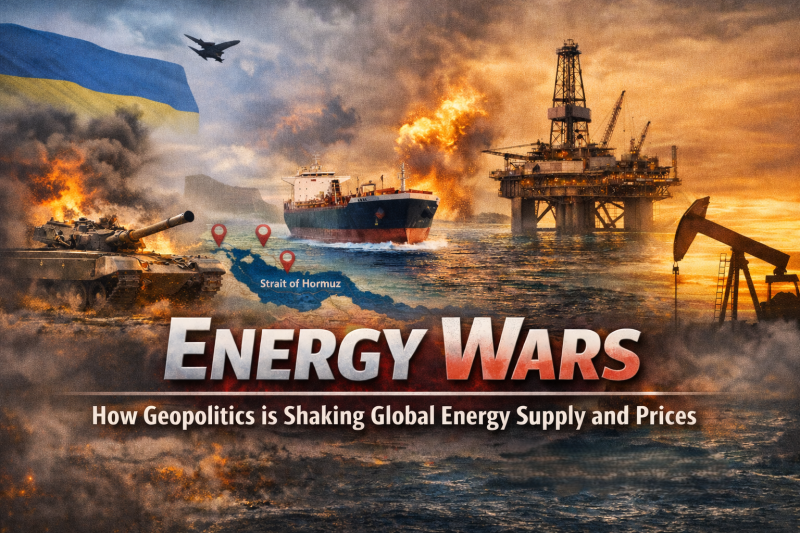
The disruption of the Strait of Hormuz, through which one-fifth of global crude oil travels, has triggered a fuel crisis whose downstream effects will fall hardest on the world’s most vulnerable populations. Those living in food-import-dependent nations across sub-Saharan Africa, South Asia, and the Middle East will feel it most. Sudan’s famine risk has been elevated further. Gaza’s humanitarian situation is materially worsened by rising prices for the very goods that manage to reach it at all.
There is a logic of mutual reinforcement at work here. Russia sees in the Iran conflict a rare opportunity: a United States stretched across two theatres, a world distracted, and a chance to consolidate gains in Ukraine under reduced scrutiny. Iran, facing overwhelming military force, leans harder into its Russia partnership for tactical intelligence and drone expertise. And in Sudan, both warring sides can see clearly that the international community’s attention, and therefore its leverage, has never been thinner.
The humanitarian stakes could not be higher. Across all four theatres covered in this report, we are looking at over a million Russian casualties, over 72,000 Palestinians killed since October 2023, over 1,400 Iranians killed in just two weeks of strikes, over 260,000 estimated dead in Sudan, 11 million Sudanese displaced, and 3.2 million Iranians internally displaced in under a fortnight. These are not statistics. They are lives.
The coming weeks will be defining. Will Iran’s new supreme leader seek negotiations or double down on escalation? Can Ukraine consolidate its territorial gains before a potential spring Russian offensive? Will the Gaza ceasefire be salvaged, or will the territory face another cycle of full-scale assault? And will Sudan, now approaching its fourth year of war, finally receive the international attention it needs to prevent a complete civilisational collapse?
None of these questions have easy answers. But they demand to be asked, loudly, clearly, and without ceasing.